The Arms
From a photocopied sketch to a registered achievement: the family's heraldry, told straight.
Where it begins: the D’Amory arms
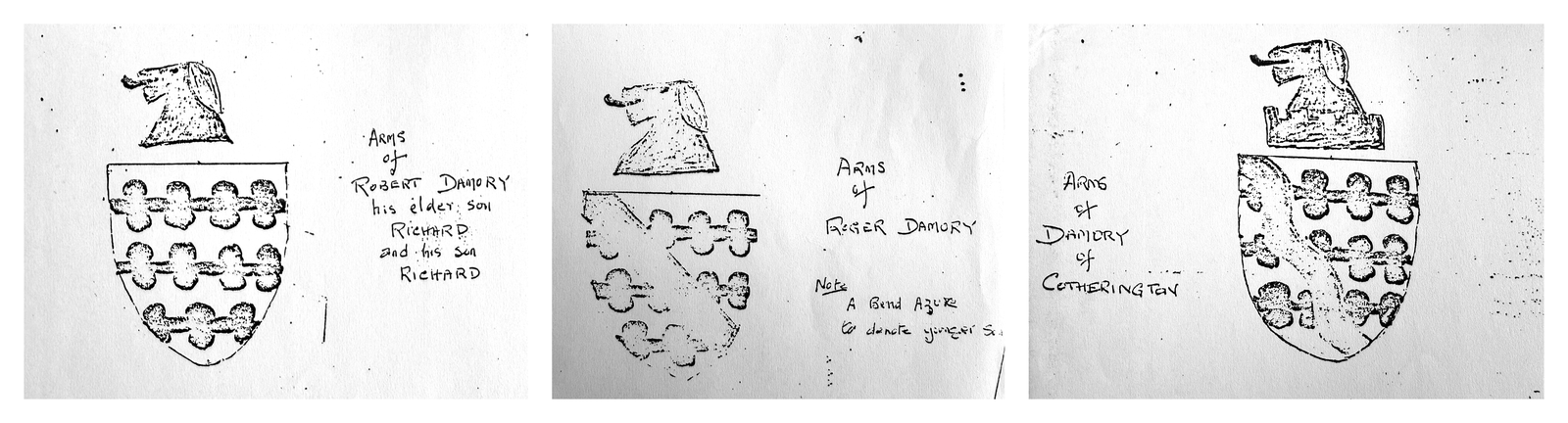
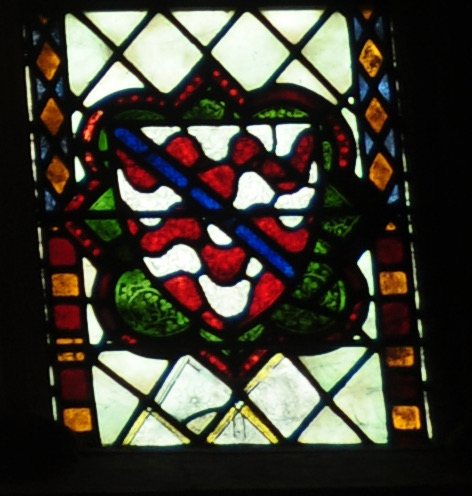
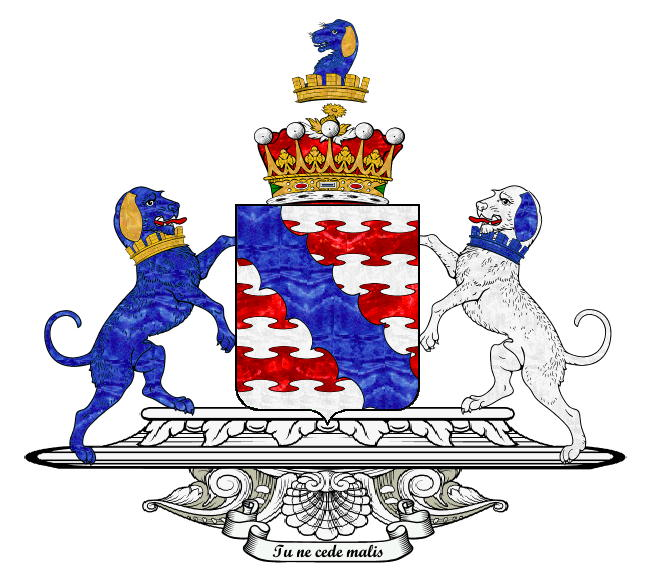
The oldest pieces of Damery heraldry the family holds are photocopied sketches, passed down through the family papers: the arms of Robert Damory (and his sons), Roger Damory, and Damory of Cotherington: a shield of barry nebuly of six argent and gules, with a bend (azure or sable) and a talbot for the crest. It is both a tradition and now a grant from The College of Arms in the family's hands, to Edward Damery of Melbourne. I also took a photograph of Roger's arms at Tewkesbury Abbey.
So this is where the name's heraldic story starts, and it is the image the family history opens on.
Where the old arms are recorded
The barry nebuly is not a family memory resting on one sketch: it stands in the written record of English heraldry from the beginning. The earliest entry is the Parliamentary Roll of Arms of about 1312, British Library Cotton MS Caligula A. XVIII, where both brothers appear under Oxfordshire at shields 328 and 329: Sire Richard Ammori, oundee de argent e de goules, the coat borne plain by the head of the house, and Sire Roger Ammori, meisme les armes, a une bende de sable, the younger brother's difference. Two things follow. The field was blazoned oundee, wavy, in an age before heralds distinguished wavy from nebuly, which is how the Tudor visitations came to record it as nebuly; and the bend so often treated as part of the Damory coat began as Roger's cadency mark, and sable, not the azure of the later books. The later rolls agree: a roll of Edward III's reign, transcribed by Nicolas, has "Monsire Daumary, port unde, argent et gules, de vj peeces", and Lord d'Amorie, summoned to Parliament in 1317, is indexed by Papworth with the bend. The full working is in the research note on the arms of Sir Richard Damory.
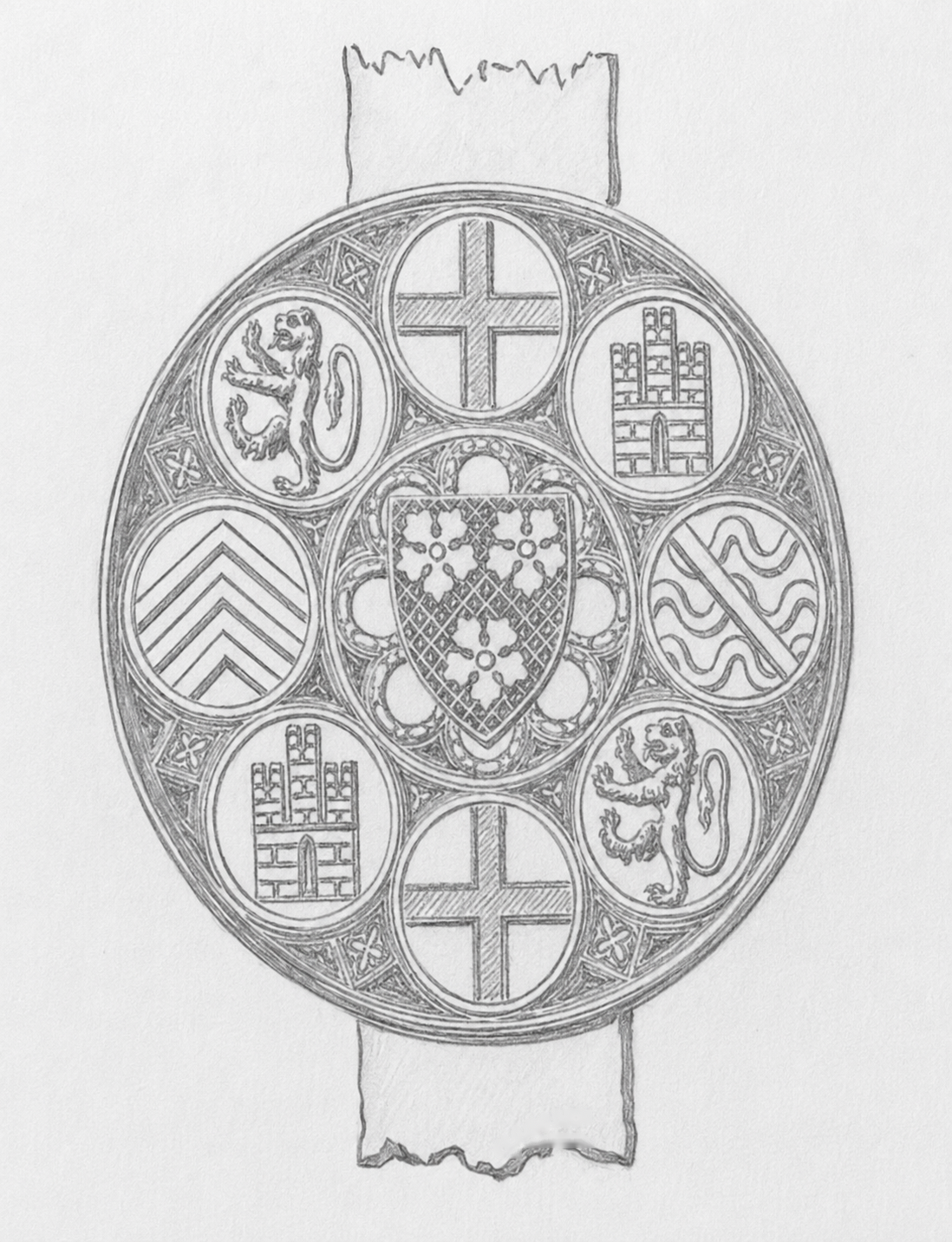
The seals say the same thing in wax. Woodward's Treatise on Heraldry describes the seal of Elizabeth de Burgh, the de Clare heiress, carrying the arms of Roger d'Amory, her third husband; and the seal of their daughter Elizabeth d'Amori, its flanks charged with de Clare and d'Amori together, the two shields side by side on one matrix. Hope's Heraldry for Craftsmen describes Roger's own seal, his great shield of d'Amory ringed by roundels of Clare, Verdon and d'Amory.
And Burke's General Armory of 1878, page 259, read against the page image, carries the whole run: the Somerset Damories of the twelfth century with the barry nebulée coat and a talbot's-head crest; an explicitly Irish entry, "Damory (Ireland)", barry of six argent and gules with a bend azure, its crest a demi-lion rampant guardant; and the D'Amerys of Park House, Stourbridge, under the motto this family still uses: Tu ne cede malis.
The book arms
The achievement on the front cover of the printed family book, Tu Ne Cede Malis, was assembled for it: the arms of Damery, Freke, Beamish and Townsend quartered on one shield: four of the documented families of this history brought together as a piece of book art.
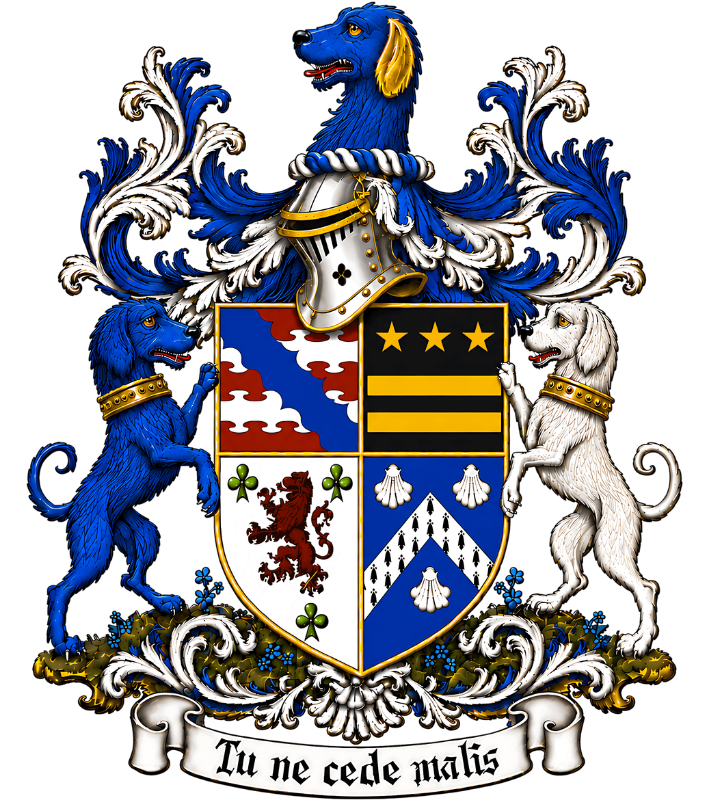
This quartering is decorative, an assembly made for the book, not a grant or a matriculation. In strict heraldic terms it is a false quartering, and it is recorded here as exactly that. The arms below are the real thing.
My personal arms
Rather than borrow, I designed my own arms and had them painted, and they are now registered: entered in The International Register of Arms, No. 0804 (Vol. 5), 11 July 2026, having been assumed in Ireland on 29 June 2026. The shield carries the family's heraldic memory forward: the barry nebuly six of argent and gules, with a blue pale to carry the escallop (for Travers, Townsend and Bernard), the lion rampant (for the Wessex and English royal branches, Marshall, Beamish and Pennefather), and the mullet (for de Vere, Freke and Lane). The talbot of the old Damery crest is now erased, with a silvered ear.
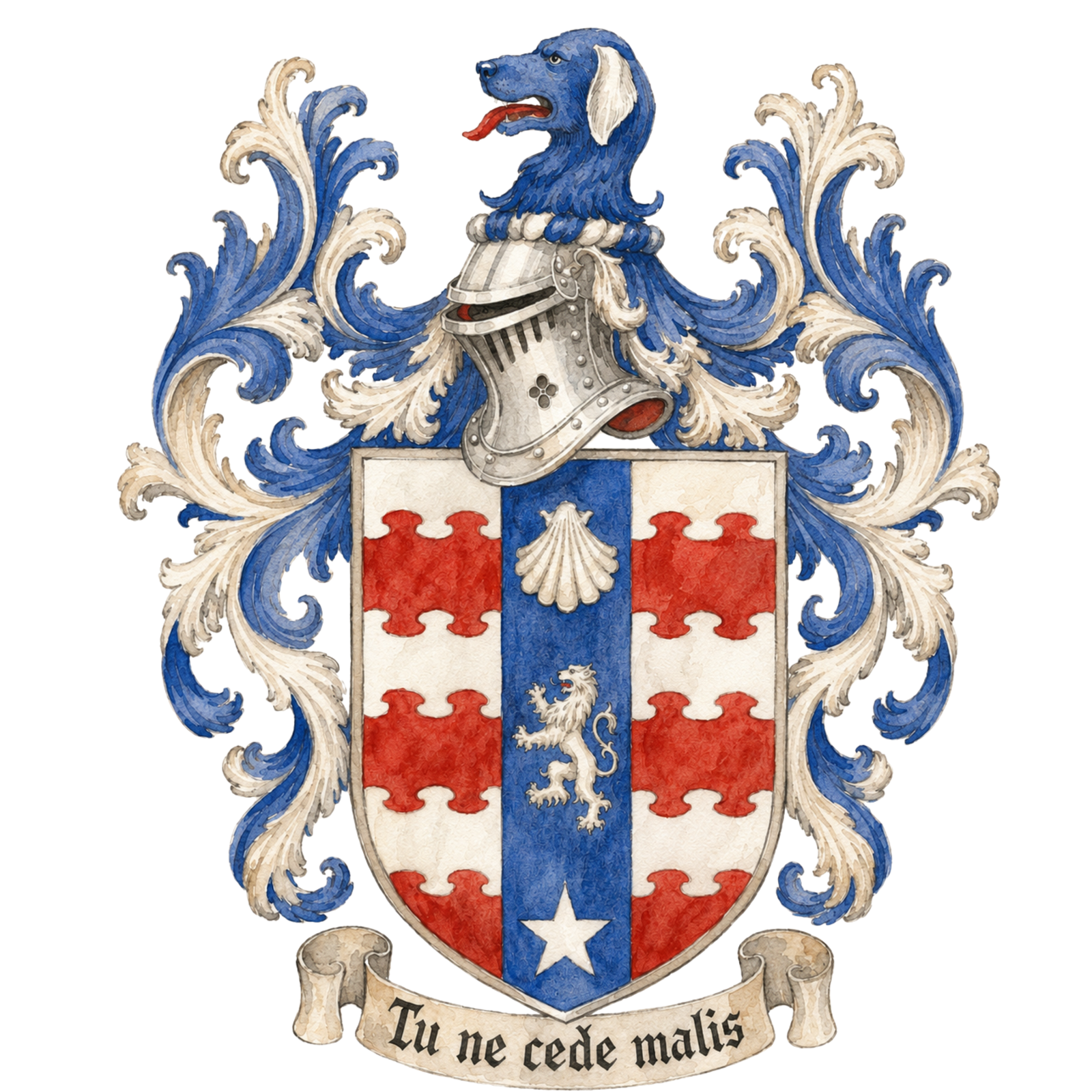
Arms Barry nebuly of six Argent and Gules, on a pale Azure a lion rampant between in chief an escallop and in base a mullet all Argent.
Crest Upon a Helm with a Wreath Argent and Azure a talbot's head erased Azure, eared Argent. Mantled Azure doubled Argent.
Motto Tu Ne Cede Malis: yield not to misfortune.
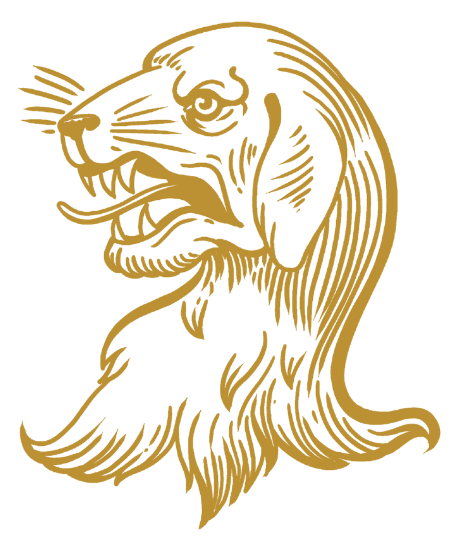
Badge A talbot's head erased Argent, purfled Or.
Registered The International Register of Arms, No. 0804 (Vol. 5), 11 July 2026. Assumed: Ireland, 29 June 2026. Certificate emblazonment: Alexandr Chernushkin (arms); Yornelys Zambrano (badge).
This is a highly classical coat of arms that tells a powerful story of resilience:
The Shield: A fierce, honourable silver lion standing firm on a blue pillar of loyalty, flanked by a pilgrim's shell and a guiding star, all set against a backdrop of turbulent red-and-silver storms.
The Crest: A blue Talbot hound's head with silver ears, torn at the neck: representing a listening, peaceful mind backed by a fiercely protective, unyielding loyalty.
The Motto: Tu ne cede malis, the ultimate vow never to surrender to adversity.
The badge
A talbot's head, hand-drawn in antique gold, is my personal mark. You will find it quietly at the foot of every page of this site. The badge is registered with the arms: A talbot's head erased Argent, purfled Or.
What the charges have gathered since
The shield was designed in June 2026 for the families then proven, and every charge was chosen for somebody: the escallop for Travers, Townsend and Bernard, the lion for Beamish and Pennefather, the mullet for Freke and Lane. Since registration, the research has kept discovering that the charges chose better than anyone knew.
The lion rampant now stands in the line many times over: the royal lion of Scotland, attached by tradition to my ancestor William the Lion; the canting lion of the kingdom of León, Alfonso IX's shield; the red lion of William Marshal; the blue lion of the Percys; the golden lion of the Talbots of Goodrich; and in Wales, Owain Glyndŵr's banner of four lions rampant, with the lions the later heralds attributed to his royal house of Powys behind it. The escallop is the pilgrim's badge, and the line now holds the real thing: Fulk, King of Jerusalem; William Longespée the younger, who fell on crusade at Mansurah; Ralph de Gael and Emma FitzOsbern, who took the cross together and died on the road east. The mullet argent remains what it became in July: the silver star of the de Veres, the most famous mullet in heraldry, on the line that carried half these crowns. Even the field has gained company, the barruly argent and azure of Valence and Lusignan now standing among the ancestors' shields; and the talbot of the crest, chosen for the old Damory hound, now shares its name with the Talbots who are themselves in the direct line.
None of this is claimed as derivation. The shield was drawn for the name, and the descents keep arriving to stand behind it.
The arms of the Melbourne Dammerys
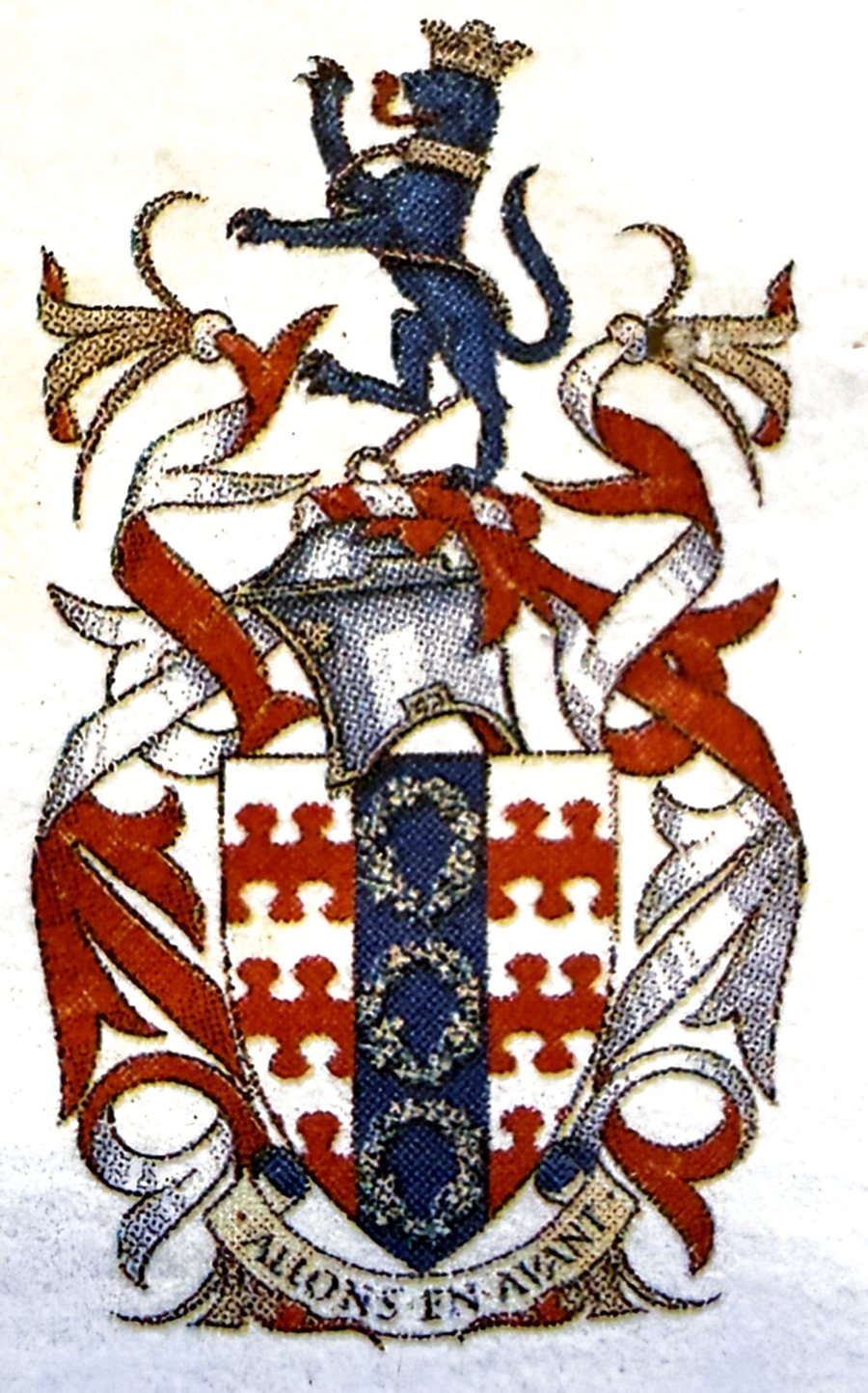
The Melbourne branch bears arms of its own, preserved in the papers of Edward John Barr "Ted" Dammery and carried on the masthead of the Melbourne tree. They were granted by the College of Arms in London, the grant handled by the late Sir Peter Gwynn-Jones, afterwards Garter King of Arms, who confirmed it as genuine to the family's correspondents in 1994; and with the grant a pedigree of five generations, headed by Edward Damery of Tullyglass and his wife Sarah Jane Barr, was placed on official record, as York Herald confirmed to this family in June 2026 (the College's record has her as "Bass", a slip for Barr). It is Ted's, and his descendants'. The arms are a differenced version of the old coat: the barry nebuly of six argent and gules of the d'Amory barons, with a pale azure laid over it charged with three chaplets; for the crest a talbot rampant azure, crowned or, the same hound that serves this family as its badge; and the motto Allons en avant, "let us go forward", the branch's own answer to Tu ne cede malis. That is the achievement as read from the printed emblazonment; the date of the grant is not among our papers, and its exact blazon will be added when the branch's copy gives it.
The alternative badge
In addition to the registered arms and badge above, the discoveries of July 2026, the descents traced up the female lines of my father's grandmother's people to the royal houses of Europe and Ireland, deserved a mark of their own. This is it. It is assumed, not registered, as badges have always been.
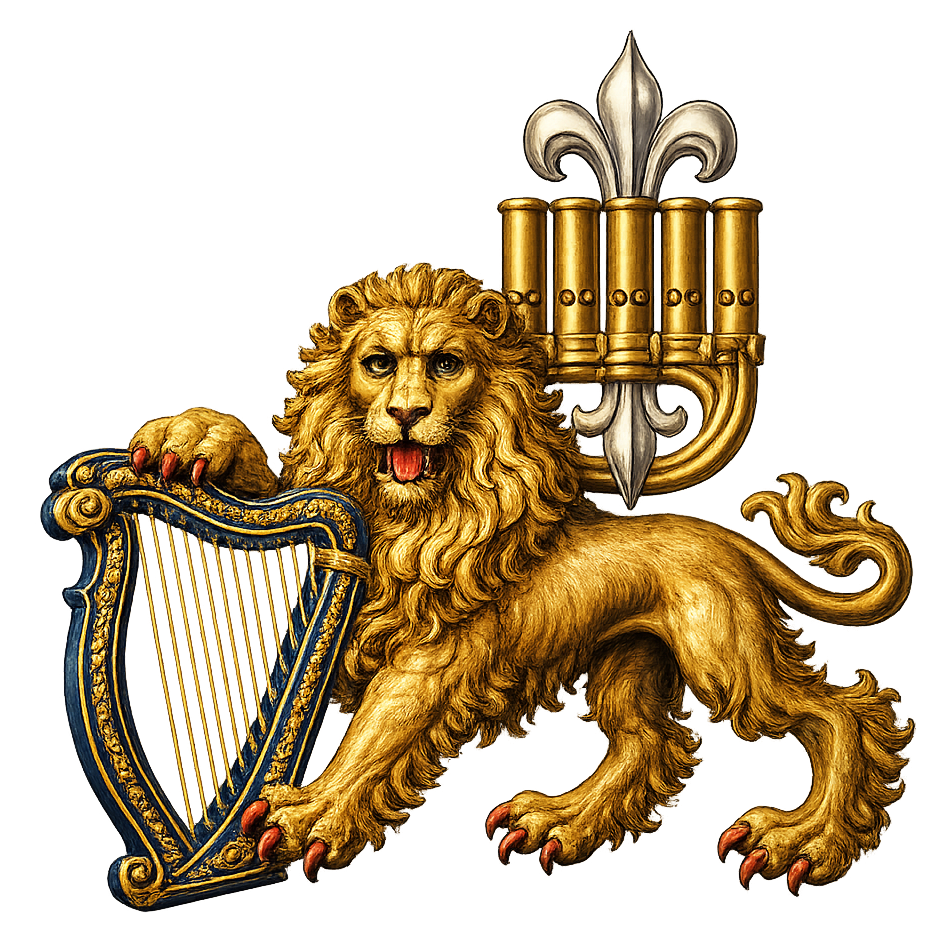
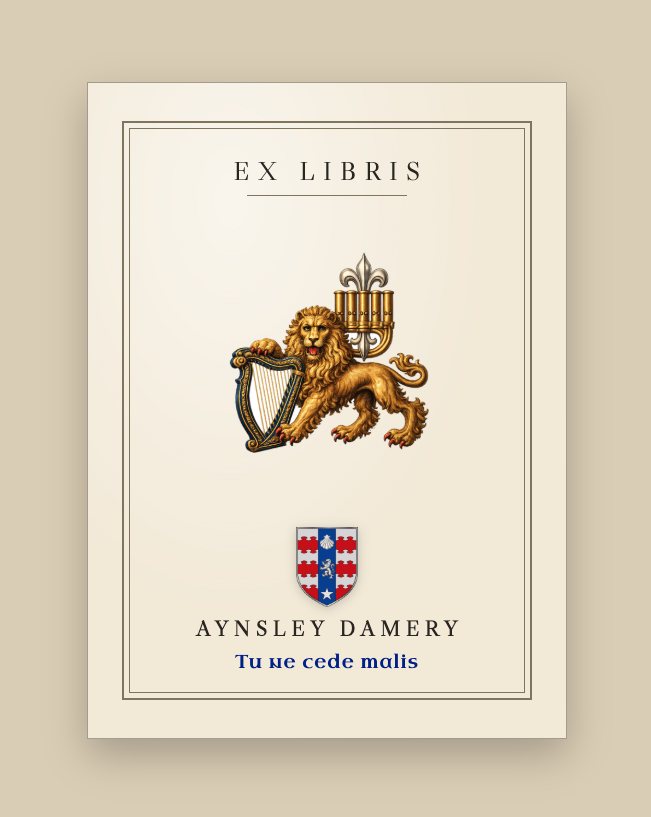
Badge A lion passant guardant Or, armed and langued Gules, sustaining with the dexter forepaw an Irish harp Azure, garnished and stringed Or, and standing before a clarion Or enfiled by a fleur-de-lis Argent.
Read it as the descents in miniature. At the centre stands the clarion Or, the old Anglo-Norman organ-rest that the de Clares themselves carried as their badge. Through its chamber runs a fleur-de-lis Argent, the lily of France, threaded clean through. Along the base walks a lion passant guardant Or, the royal lion of the Norman and English kings, looking forward and anchoring the whole. And in its dexter forepaw it grips the low-headed Irish harp, Azure garnished and stringed Or, the harp of Brian Boru's tradition. Norman lion, Clare clarion, French lily, Irish harp: the four roads of the descents in one device.
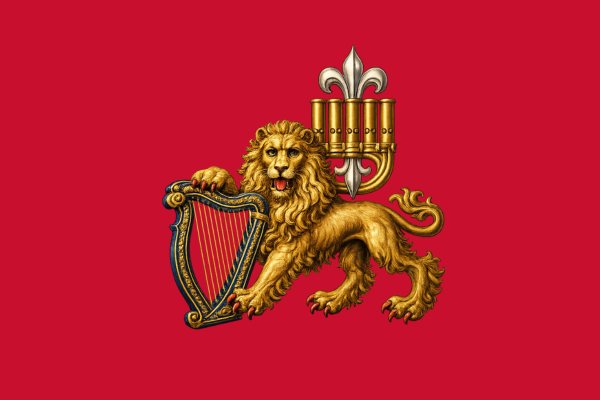
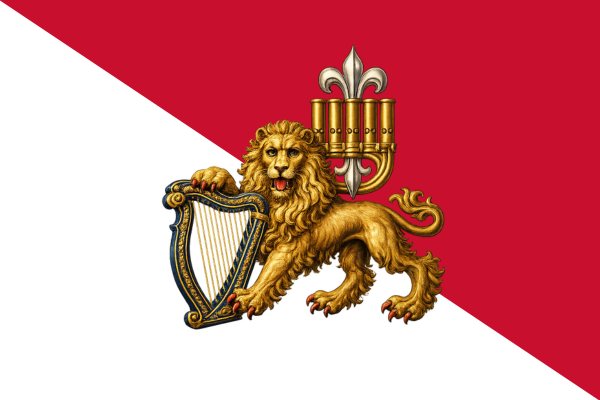
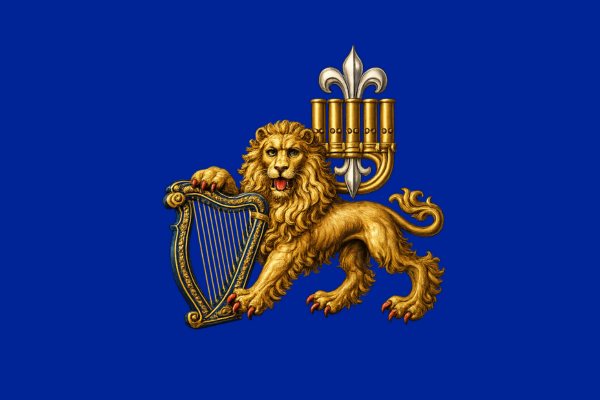
The badge in banner form: on red, on white and red, and on blue.