The Joneses of Drombeg
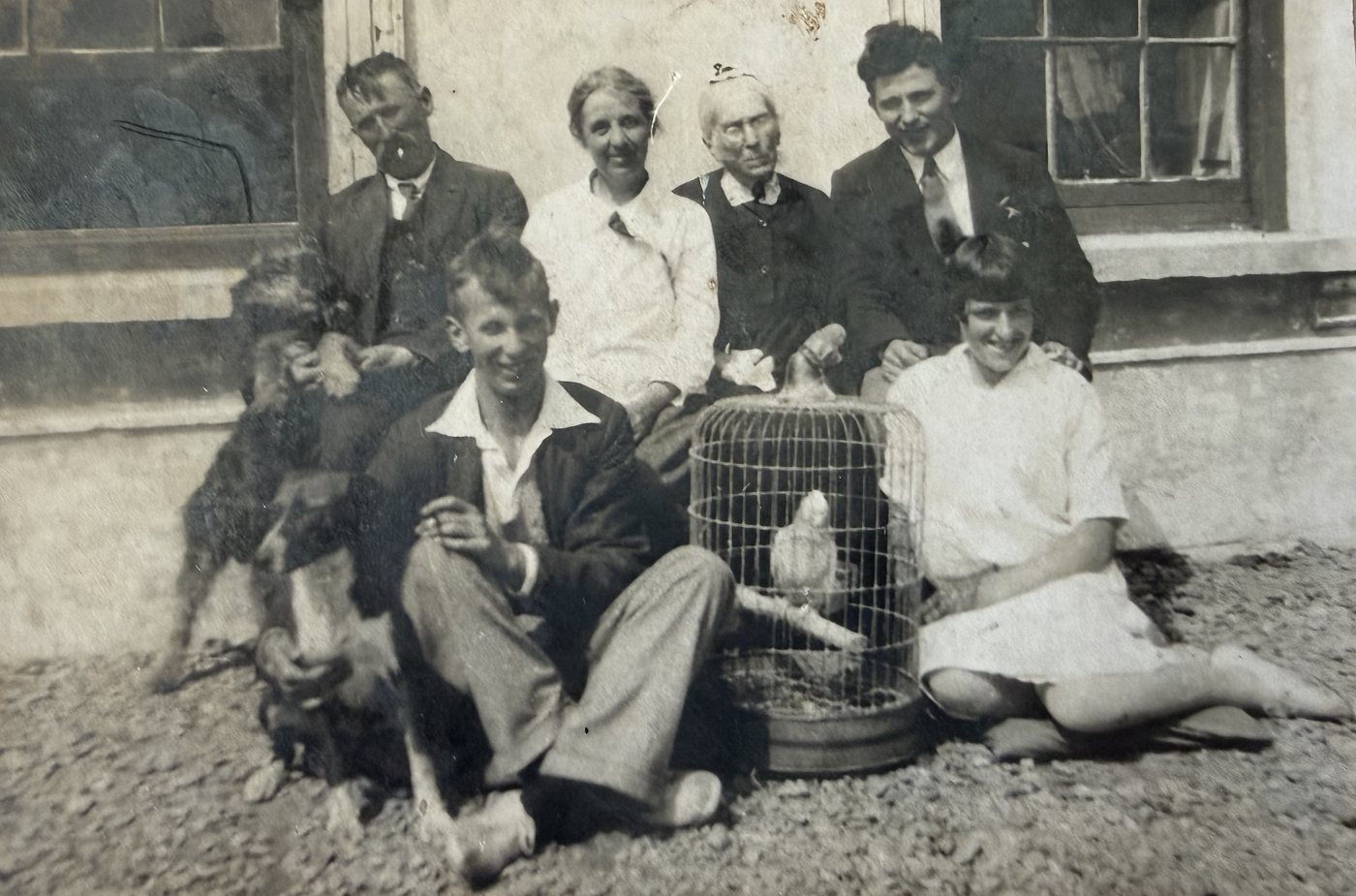
Through my grandmother, Alice Dorothy Jones, the tree runs into one of the old houses of West Cork. Drombeg House, near Glandore, stood on the demesne that held the famous Bronze Age Drombeg stone circle. So, throughout the family’s long tenure, the “Druid’s Altar” lay literally on Jones land, and they used it as a picnic table (see a photograph from the family album here)!
By tradition, the family sprang from a major in Cromwell’s army; but the documented founder is Henry Jones (active 1703–19, my 6× great-grandfather). Henry's own marriage survives in the driest and most reliable of places, a Registry of Deeds memorial of 1719: "Henry Jones, of Drombegg, Co. Cork" married Ann, daughter of William Lambley, alderman of Cork, with her family's lands at Crohane settled in tail male. So the founder of Drombeg married the daughter of a Cork city alderman (land and civic money joining hands, as they usually did).
From him the line descends in well-recorded steps: Edward Jones (d. 1774); the Rev. Henry Jones (1756–1825), a Trinity man and Vicar of Lislee; the Rev. Jonas Travers Jones, the “improving proprietor” praised by Lewis for his enhanced farming methods; Harry Jones; and Richard William Jones, still at Drombeg in 1926.
For more than two centuries, Drombeg stayed in Jones's hands, and the family kept the shape of its class. Improving landlords and Church of Ireland clergymen, Trinity men ordained into the parishes around Lislee, Kilmacabee, and Tullagh. But the nineteenth century turned against the landed gentry of Ireland: the Famine and the debts behind it forced much of the estate through the Encumbered Estates Court in 1852, and Harry Jones's own four hundred acres the same way in 1854. The Joneses held on, smaller each generation, until 1923, so that the stone circle which had sat on their land for two hundred and twenty years passed out of the family in the very first year of the Free State.
The line did not run only to rectories and drawing-rooms. My grandmother Alice had a brother, Captain Henry Newport Edward Jones (the "Newport" carried down from the White side), who went to sea in the merchant navy. As master of the unarmed steamer Blythmoor, he was named in the London Gazette in 1940 for bringing his ship through a sustained air attack off Flamborough Head; the Blythmoor was herself lost that same spring, sunk in the harbour at Narvik in the Norwegian campaign. A Drombeg Jones, three centuries on from the Cromwellian soldier who founded the line, was at sea in the world's war. One of the many Irish-born men who served in the merchant navy while their own country kept its neutrality.
Drombeg came to the Joneses by a curious route. In 1703 the lands were granted to Henry Jones by the Company for making Hollow Sword Blades in England, a sword-making concern turned land-speculator, buying up estates forfeited after the defeat of James II. So a Jacobite forfeiture, laundered through an English sword-blade firm, founded the family seat above the Druid’s Altar.