The Frekes: to the Tudor West Country
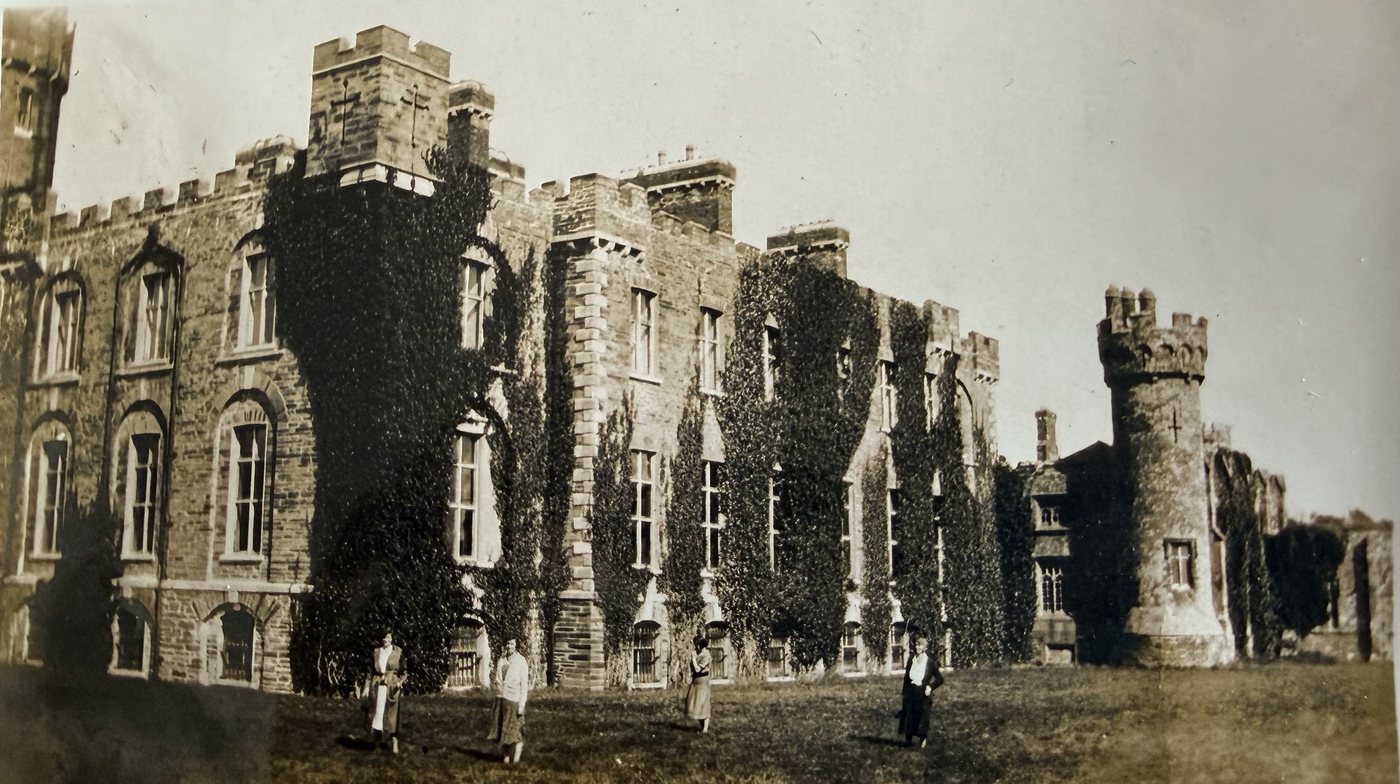
Freke is said FREEK, as in the castle, and as in 'freak,' its very cousin: from Old English freca, a warrior.
Francis Bernard’s wife was Elizabeth Freke (b. 1607), and the Freke line reaches far back into England, to her father William Freke (1577–1647), baptised at Shroton in Dorset, who came over in the Munster Plantation and settled at Rathbarry with his son Sir Arthur; he married Anne Swaine of Sarson, Hampshire. Above him stands his father Robert Freke (d. 1592), an auditor of the Exchequer under Henry VIII and Elizabeth I (my 11× great-grandfather, a Tudor official). Robert's own father was Frank (Francis Freke) of Thorncombe, in Devon (b. c. 1500), my 12× great-grandfather, who lent £12 (a notable sum then) to Queen Mary by Privy Seal in 1558. With him, the documented line runs out: the trees that carry the Frekes back further, to a supposed Francis born around 1470, don't hold together under inspection, and I'm content to let my oldest proven ancestor on this branch be a Devon gentleman in the reign of Henry VII.
William's son Arthur founded the line of Rathbarry, later Castle Freke, and William's daughter Elizabeth carried the Freke blood into the Bernards of Castle Mahon by her marriage to Francis Bernard. A famous cousin sits on this branch: the diarist Elizabeth Freke (1641–1714), whose celebrated journal of life at Rathbarry survives.
A point often muddled even in printed charts: my ancestress Elizabeth Freke and Sir Arthur Freke (ancestor of the Lords Carbery and of Castle Freke) were brother and sister, both children of William Freke of Rathbarry, not father and daughter. I descend from Elizabeth; the Castle Freke family from Arthur. The Carberys are cousins, then, not my senior line.