A queen from Kiev
3 August 2026
Of all the crowns the July research reached, the least expected stand a thousand miles east: the Grand Princes of Kiev and the first christian King of Sweden, carried into the tree by a princess who could write her own name in a court that could not.
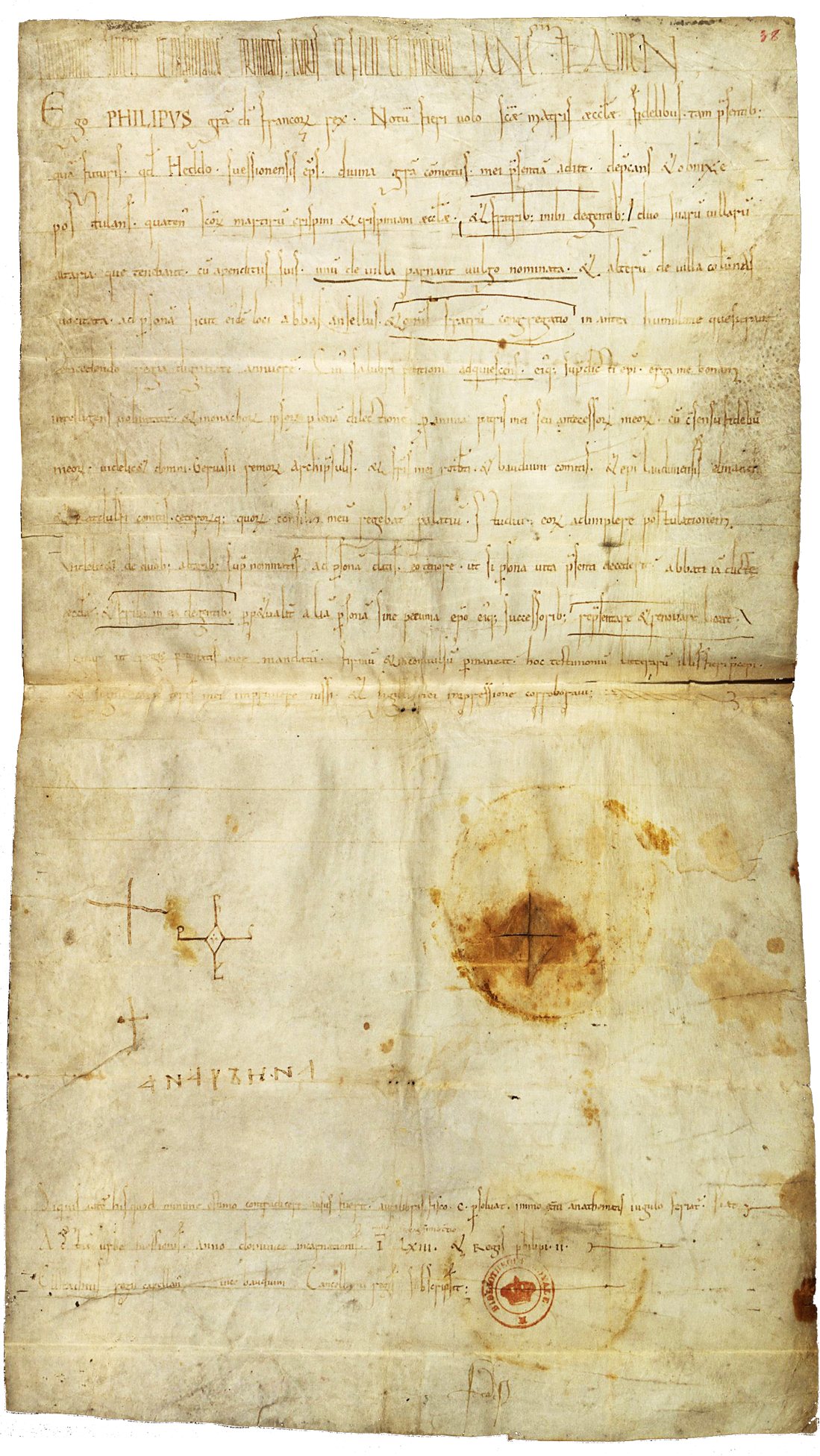
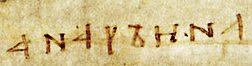
No family in West Cork sits down to trace its ancestors expecting to arrive in Kiev. This one arrived by way of France.
In 1051 King Henry I of France, needing a bride of rank and finding Europe's courts thin on unrelated princesses, sent an embassy two thousand kilometres east and came back with Anna Yaroslavna, a daughter of the Grand Prince of Kiev. She has a small immortality among historians: on French royal documents her signature survives, written in her own hand in Cyrillic letters, ANA, on parchments the great lords of France marked with crosses because they could not write. Queen of France, regent for her son, and by her granddaughter Isabel de Vermandois an ancestress of half the English baronage, this family included: Isabel's blood ran to the de Vere Earls of Oxford, and down their long ladder to Jane Vere of Gosfield, and so to here.
Anne's father was Yaroslav the Wise, under whom Kiev stood at its golden height, the builder of St Sophia's cathedral and the Golden Gate, the lawgiver of the Rus, a ruler so successfully married into Europe that his daughters wore the crowns of France, Norway and Hungary at the same time. His wife was Ingegerd of Sweden, daughter of Olof Skötkonung, the first King of Sweden to be baptised. And his father was Vladimir the Great, who took the whole of the Rus into christendom in the mass baptism of 988, and whose grandmother Olga of Kiev, regent, widow and eventually saint, is one of the most formidable women in the whole medieval record.
So the tree now runs from Drombeg to the Dnieper. It is drawn, generation by generation, in The Royal Houses, and it is worth saying plainly why it can be trusted: none of this rests on family tradition. It is the standard, boring, thoroughly documented genealogy of the royal houses of Europe, and this family's only discovery was the well-recorded door that leads into it. The romance is real precisely because the paperwork is dull.