The king's favourite
22 November 2026
Roger Damory was a younger son from an Oxfordshire manor. In three years he became the favourite of Edward II and the husband of the king's niece. Five years after that he died a rebel at Tutbury. He is my twenty times great-grandfather.
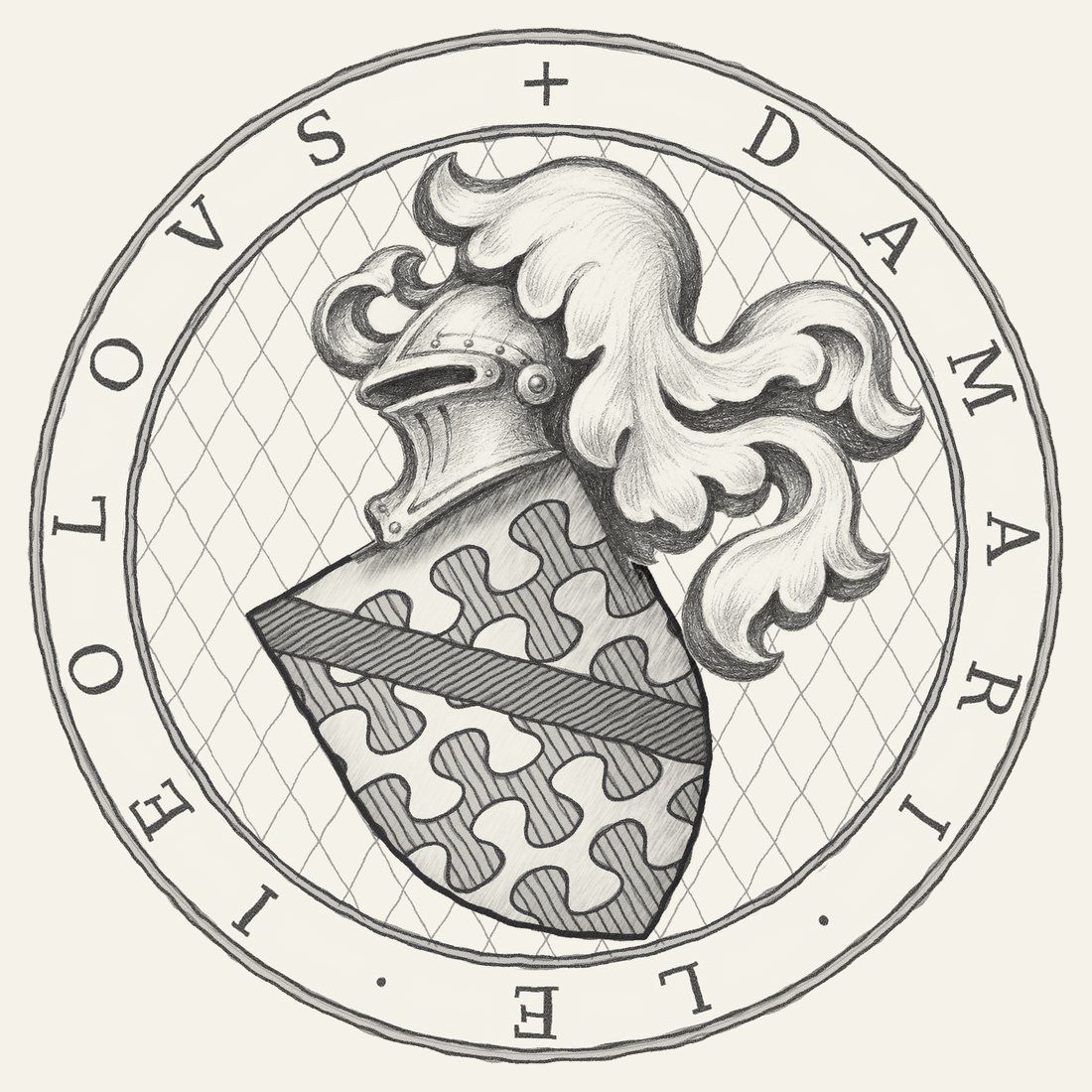
Roger Damory had no great prospects. One chronicler calls him "a poor and needy knight". His father, Sir Robert Damory of Bucknell in Oxfordshire, died in 1285, and the family lands went to his elder brother Richard. In 1313 Richard gave him the manor of Bletchingdon for his life. He first appears in the records in 1306 as a knight, and he served in the household of Gilbert de Clare, Earl of Gloucester. The roll of the Dunstable tournament of 1309 records his arms: the wavy bars of his family, silver and red, with a blue bend across them to mark the younger brother.
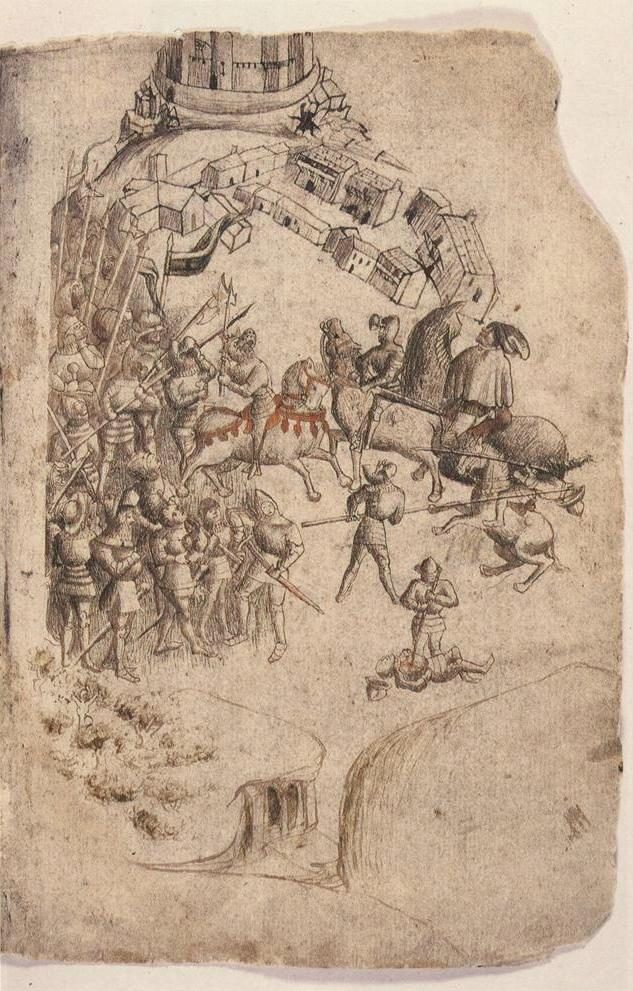
Gloucester was killed at Bannockburn in June 1314. Roger fought there too. Until then he had been Gloucester's man, with no mark of royal favour on record. A royal grant of March 1317 gives the reason for what followed: his good service against the Scots at Stirling. Within months of the battle Edward II had made him constable of Knaresborough Castle and told him to stay at court.
Three years up
The gifts that followed are set out by the historian Kathryn Warner from the royal rolls. Roger was given the keeping of Corfe, Gloucester and St Briavels castles. He was paid for serving against Llywelyn Bren in 1316. In January 1317 he was granted two hundred marks a year, and in February the manor of Holton.
Then came the greatest gift. About April 1317 the king married him to his own niece, Elizabeth de Clare. She was a granddaughter of Edward I, twice widowed, and one of the three sisters who shared the earldom of Gloucester after their brother fell at Bannockburn. Her share included the lordship of Usk. The king's grants of Sandal and Vauxhall that summer say they were made because Roger had married his niece, and for his good service at Bannockburn.
He was summoned to parliament from November 1317. Their daughter Elizabeth was born in May 1318, and the king gave twenty pounds to the messenger who brought the news.
It made him enemies. Thomas, Earl of Lancaster, the king's cousin, demanded that Roger be sent from court, and Lancaster's men seized Knaresborough from him. The Pope wrote to the king urging him to send his favourites away.
Five years down
The king found a new favourite. Hugh Despenser the younger was married to Elizabeth's sister Eleanor. By 1321 Roger was in arms with the lords of the Welsh March against the Despensers, on the same side as his old enemy Lancaster.
The Complete Peerage calls him one of the principal rebels. He was at the taking of Gloucester, the burning of Bridgnorth, the siege of Tickhill and the fight at Burton-on-Trent. In March 1322 he was left behind at Tutbury Castle, sick or badly wounded. The king's men took him there on 11 March. He was condemned to death as a traitor. The accounts differ on what came next. In one the king put the sentence off on 13 March, because he had once loved him well. In another Roger was dead before it was pronounced. Either way he died at Tutbury on the 13th or the 14th, and no executioner touched him. He was buried at St Mary's, Ware.
On 16 March his widow was shut up in Barking Abbey.
Both sides
Hugh Despenser the younger is also my twenty times great-grandfather, through his wife Eleanor de Clare. So the favourite who rose and the favourite who replaced him are both in the tree, married to two sisters, and Despenser went to the gallows at Hereford in 1326, four years after Roger died at Tutbury.
Roger's line came down through his daughter. The thirty generations from his family to mine are on the Damory descent.
Sources: the Complete Peerage, volume iv, under Damory; Kathryn Warner, "The Rise and Fall of a Royal Favourite: Roger Damory", on her Edward II site, for the grants and the quarrel with Lancaster.