The long sword
1 November 2026
A fourth independent road to the Plantagenets has closed, and it is the shortest kind there is: father to son. William Longespée, Earl of Salisbury, was Henry II's acknowledged natural son, and his granddaughter Ela stands in the documented direct line.
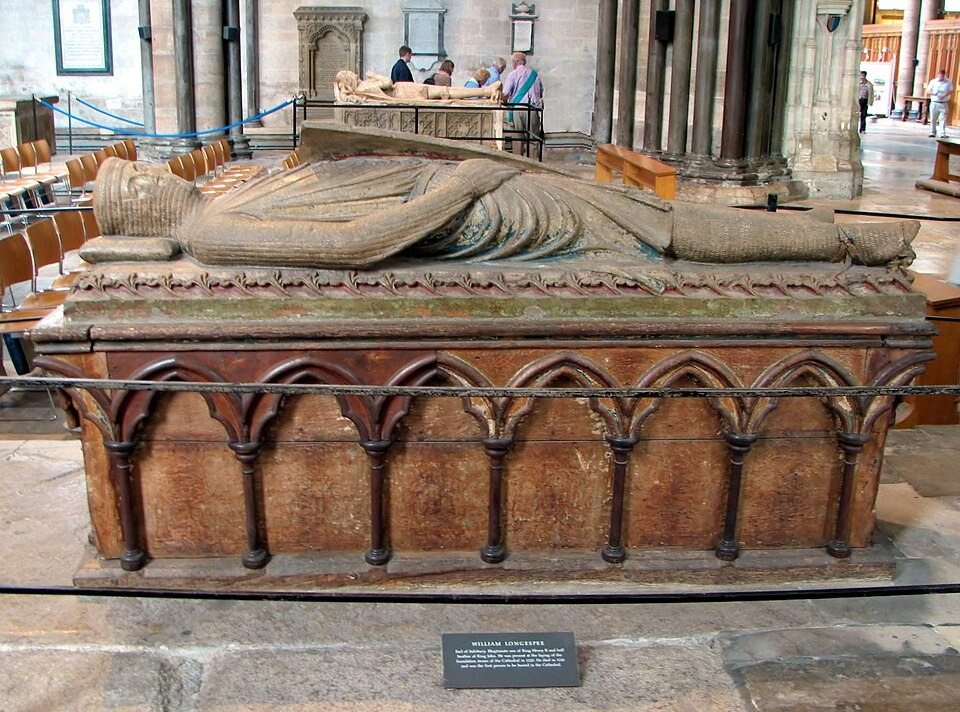
Henry II has been in this tree for months, reached the respectable way, down through Edward I and the long ladders of the thirteenth century. What the September research added is a road that skips the ladders altogether. William Longespée, the man with the long sword, was Henry II's natural son, openly acknowledged, raised at court, made Earl of Salisbury by his half-brother Richard the Lionheart's successor John, whose side he held through Magna Carta and the French invasion that followed. His granddaughter Ela Longespée married into the Audleys, and from there the line runs down the roads this site has already drawn to Margaret de Clare and the Raleighs.
The identity of William's mother was a mystery for eight centuries, the romancers giving him Fair Rosamund, until a charter of William's own settled it: he names his mother as Countess Ida. She was Ida de Tosny, who after her time at Henry's court married Roger Bigod, Earl of Norfolk, and here the tree does something better than any invention. Ida was already in this family's line as the mother of the Bigod countesses. She now stands in it twice, by the king's son and by the earl's daughter: one woman, two beds, both documented, both ancestral. She is the fifth such double ancestress the research has found, and each one is pedigree collapse caught in the act.
The Longespée generations carry their own stories in the notes: William's son died leading the doomed charge at Mansurah on crusade, and his daughter-in-law's line touches Ela of Salisbury, the countess who was abbess of Lacock and, remarkably, sheriff of Wiltshire in her own right. But the arithmetic is the point. Henry II, the Empress Matilda behind him, and Geoffrey of Anjou behind her are now reached by four separate documented roads, and when four independent chains of parchment arrive at the same man, the question stops being whether the descent is real and becomes which road tells the best story. The roll is drawn in The Royal Houses, and the rungs, graded as always, on the tree.