The other England
4 October 2026
The Damery name still cannot find its England. It turns out the family already had one, documented village by village in the Suffolk wool country, and it arrived through the woman on the 1888 marriage certificate.
Readers of the book will know the certificate. In September 1888, at Ballymodan in Bandon, Thomas Damery married Charlotte Louisa Channell, and one word on their marriage record would eventually rewrite thirty years of my father's research on the paternal line. Charlotte died at Southern Road in Cork in 1952, close enough to touch: my great-grandmother, a woman my own father knew.
What the August research added is where she came from, and the answer is an England the family never thought to look for. Charlotte's people were English: her father a Channell of the villages north of Bury St Edmunds, her mother a Wright, and behind them a web of Suffolk parish families, Symonds and Clark, Game and Ely, Newport and Ransome and Griggs, in a ring of villages whose names now enter this family's records for the first time: Ampton and the Livermeres, Shimpling, Lawshall, Glemsford, Hartest, Rede. Small farm and village families, generation after generation, in the old wool country.
Sit that beside the hunt that consumed three researchers on three continents. My father, Judy in Utah and Ted in Melbourne spent decades trying to give the Damery name a gentry England of manors and coats of arms, and the record would not supply one. Meanwhile the documented England was already in the blood, four generations deep on the distaff side of the certificate, and it is not gentry at all. It is exactly the England the Bandon Damerys themselves inhabited in Ireland: registers, land worked, names spelt by ear. The family did not need to borrow an English past. It had married one.
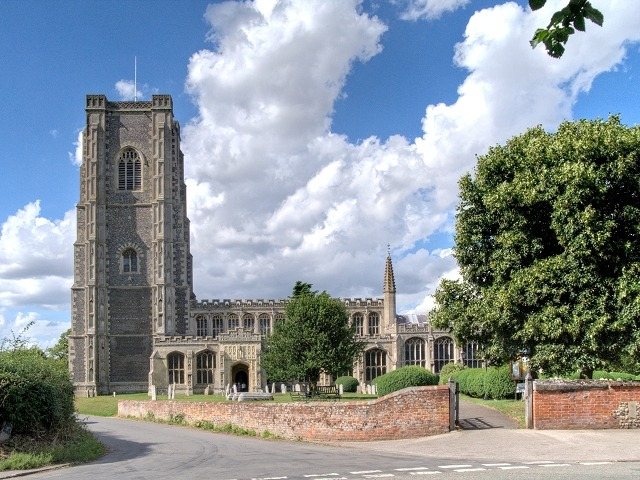
There is one coincidence worth recording, with its grade attached. These villages ring Lavenham, the town the Spring clothier fortune built, and at the far end of this same tree Margaret Spring of Lavenham married Aubrey de Vere and carried the wool money's name into the family's grandest ascent. The 1612 Visitation of Suffolk even records a Spring daughter marrying a Wright of Bradfield, a few miles from these parishes. Whether that Wright connects to Charlotte's Wrights is wholly unproven and quite possibly never will be: it is filed as a question, not a claim. But it is a fine thing that the humblest English line in this family and the most gilded one stand within walking distance of the same church tower.
Honesty about the rungs, as always: the Suffolk generations arrived by way of parish-register indexes and are graded provisional until each rung has been read against the register itself; the joins nearest Charlotte are certificate-backed. Her line is drawn on the tree, and the certificate's story is told in the book.