The Plantagenets, by another door
29 July 2026
Twice this month the research tested a road to Plantagenet blood and shut it. Then a third door opened in Kilkenny, by a different child of a different king, and because the first two were shut honestly, this one can be believed.
This Journal has already told the story of the two locked doors. One road to Edward III ran through a marriage that turned out childless. The other needed a mother who turned out to be the wrong woman. Both were closed on the evidence and both stay closed, and I said at the time that the locked doors were what would let any open one be trusted. I did not expect the open one to arrive quite so soon.
It opened in Kilkenny, in the house of Butler. Helen Butler, who married the first Earl of Thomond and stands documented on the O'Brien ladder of this family, was a daughter of the eighth Earl of Ormond. The Butler earls are one of the great recorded families of Ireland, and their ladder climbs without a gap to the first Earl of Ormond, whose wife was Eleanor de Bohun, daughter of the Earl of Hereford by Elizabeth, a daughter of King Edward I. That is the whole join. No visitation guesswork, no Victorian wishful thinking: the standard peerage record, rung by rung, from a Cork family's documented ancestress to the Hammer of the Scots.
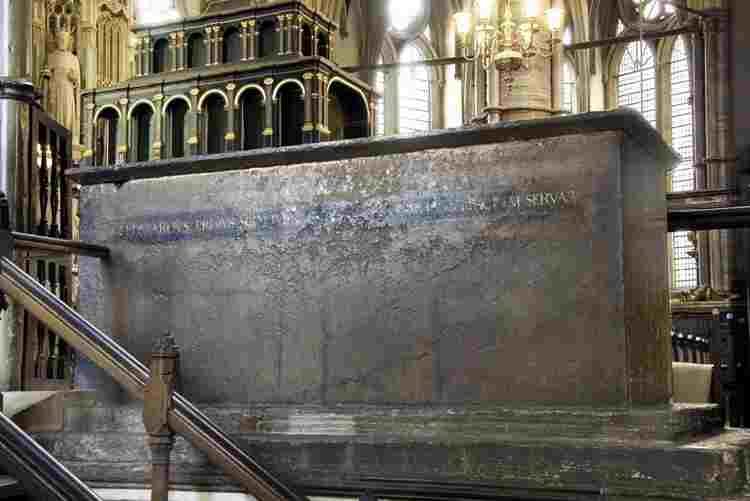
And behind Edward the line simply runs as the schoolbooks run. Henry III, who rebuilt Westminster Abbey. King John, who sealed Magna Carta, and about whom more in a later post, because the family now descends from both sides of that argument. Henry II, the first Plantagenet. Eleanor of Aquitaine, queen of France and then of England, the most remarkable woman of her century. The Empress Matilda, who fought a civil war for her son's crown. And with the Empress comes a quiet completion: King Henry I already stood in this tree through Robert of Gloucester, his openly acknowledged natural son and the Empress's own war-captain. Father's acknowledged son and father's lawful daughter, the two halves of that broken family, now converge seven centuries downstream in one Cork kitchen.
The point worth savouring is the precision. The family descends from Edward I and, on the evidence, still not from his grandson Edward III. Genealogy done honestly is exactly this pedantic, and exactly this rewarding. The two shut doors and the one open one are told together in Chapter 26, and the whole Plantagenet ladder is drawn in The Royal Houses.