The second anchor
24 July 2026
Yesterday the family's Domesday claim carried one honest asterisk. Today it carries none: Richard FitzGilbert de Clare, tenant-in-chief of 1086 and joint Justiciar of England, is a documented direct ancestor, with a wife whose father was named in the battle of Hastings itself.
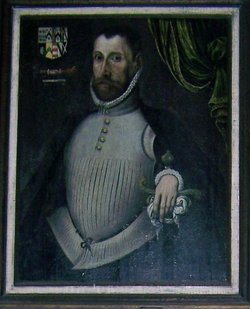
When the de Vere ladder was proven, the last rung kept Cokayne's caution: the Domesday Aubrey might be one man, or two, or three. An honest step short, and we said so. But the same week's work had quietly opened a second road. Alice de Clare, a documented ancestor on the Vere ladder, was a granddaughter of Richard FitzGilbert de Clare, and on him the records do not hesitate: founder of the house of Clare, tenant-in-chief in Domesday Book of some hundred and seventy lordships centred on Clare and Tonbridge, and joint Justiciar of England in 1075. One rung, wired this week on the same authority as everything else, and the asterisk is gone. The home page's claim, from Drombeg to Damory Court to Domesday, now stands on ground no footnote can shake.
His wife deserves her billing. Rohese Giffard is documented in her own right, which for an eleventh-century wife is rarer than the lordships, and her father Walter Giffard of Longueville is one of the handful of men whose presence at Hastings is attested by a contemporary chronicler, William of Poitiers naming him in the battle. The grading gods have a sense of humour: the mighty Richard's own presence on the field is only tradition, but one recorded step behind his wife stands a proven combatant of the fourteenth of October 1066. That wire went in before the day was out: Walter Giffard now stands on the tree, the family's one asterisk-free ancestor of the field of Hastings.
The full story, the two anchors weighed against each other, and the vineyard of Hedingham gently demoted to what it always was, the better story beside the better proof, is Chapter 23 of the living edition.
And because this family keeps its proportions: the tree now runs, documented, from a Cork kitchen table to the Conqueror's land-grants, and the name on the kitchen table's own teacups still cannot be traced past a Bandon Damery of the 1690s. Somewhere in Dublin there is a register with the answer. The research continues, exactly as its rule demands: unimpressed by dukes, and patient with the Bandon man whose very trade is still a guess.