The wall moves back
20 September 2026
For thirty years the oldest wall in the research stood at 1750. It has now moved. Richard and Margaret Damery were burying family at Bandon in the 1690s, and Margaret, buried in 1696, is both the earliest dated Damery record in the town and the family's earliest documented ancestress on the name.
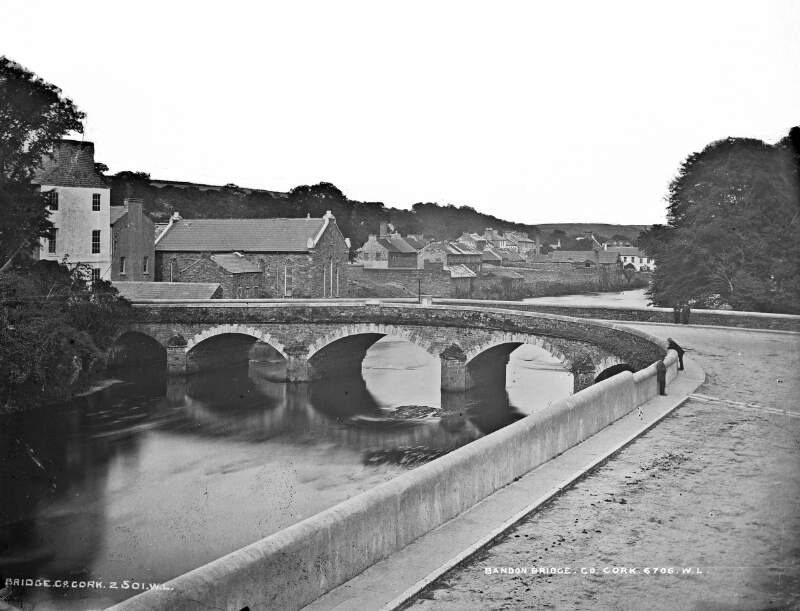
Every royal door this site has opened was found on the maternal side of the tree. The name itself, the rare surname my father hunted across three continents, has stood behind the same wall the whole time: a proven line beginning with Richard Damery of Ballymodan, farming near Bandon with children in the register from 1752, and nothing above him but tradition. That was the wall my father inherited, and the wall he left me.
It has now moved, and it moved the way this family's walls always move: not by a legend confirmed, but by registers read slowly. At the top of the town's records stand Richard and Margaret Damery, burying a family member in 1696 and a son, John, in 1708. Margaret's burial is the earliest dated Damery record Bandon has, which makes her, a woman whose maiden name nobody knows, the earliest documented ancestor the surname now possesses. The family was established in the town by about 1690, which is exactly the window the old tradition of a flight from England always pointed to.
The honest print matters more than usual here. Between Richard and Margaret at the top and Richard of Ballymodan at the bottom the registers need one bridging generation, a William "of Ballymodan" active about 1700, and he is entered in the tree as what he is: an inference, probable, labelled, unproven. The only "Richard son of William" baptism the surviving register offers, in 1727, is most probably the infant Richard buried there the following summer, though that pairing is itself an inference, and nothing in the entry says which William is meant. So the proven line still starts at Richard of Ballymodan, about 1720. The wall still stands. It is simply older now, and it has a woman's name at the top of it.
And one record older still: Gillman's index to the marriage licence bonds of the Diocese of Cork and Ross prints, for 1669, "Amary, William, and Anne Davies". The bond itself burned in 1922, and the index is the ceiling of what can be known. But a sweep of the whole index, 127 years of Cork and Ross bonds, returns exactly one Amary and not a single Damery, which makes that 1669 couple very hard to ignore.
Where did they come from? The pre-Cork question has now been worked to the record, and the results are published in two research sheets in The Name wing: Early English Damerys, every English Damery the printed record names, drawn as one tree with the joins graded rather than assumed, and Damery before Cork, every pre-1750 claim the two family histories make, tested against the sources their compilers were copying. The short version is that the balance of the evidence has swung. The Devon gentry line the tradition favoured ends in granddaughters in 1675, but the forename evidence points east instead: there is no Richard among the Devon Amorys for a century and a half, while in Essex, the county where the surname dictionary localises Damery, Richard was a house name. The wall has not fallen. But for the first time since my father opened his first envelope, the research knows which direction to lean on it.