The Piers of Tristernagh: abbots' stones and archbishops' daughters
The third ladder: an Elizabethan soldier paid a thousand marks for a rebel's head, two Archbishop-Chancellors of Dublin, the donor of the Book of Kells, and a wine-seller of Covent Garden, all in the direct line.
Constantia Piers, who married Rev. Vere Hunt in 1712, was the eldest daughter of a house that reads like a history of Protestant Ireland written by a novelist with no shame. It begins with Captain William Piers, sent to Ireland in 1566, granted the dissolved abbey of Tristernagh in Westmeath, governor of Carrickfergus, and paid one thousand marks in 1569 for bringing in the head of Shane O'Neill. That reward is historically attested; the older family tale, that he once saved the young Princess Elizabeth from her sister's men, is not, and is kept as tradition only.
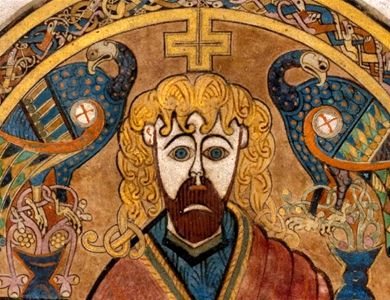
His son Henry, the traveller of the family, died in 1623 having conformed to Rome, which cannot have made dinners easier; his wife was Jane Jones, daughter of Thomas Jones, Archbishop of Dublin and Lord Chancellor of Ireland, and sister of the first Viscount Ranelagh. Their son Sir William Piers married Martha Ware, whose brother was Sir James Ware the historian, the man half of Irish source-hunting still leans on. And their son Sir Henry Piers, first baronet, managed the neatest trick of the century: knighted by Henry Cromwell in 1658, created a baronet by the restored King in 1660, and author besides, in 1682, of the first county description of Westmeath. His wife was Mary Jones, daughter of Dr Henry Jones, Bishop of Meath, sometime Cromwellian scoutmaster-general, and the man who gave the Book of Kells to Trinity College. By a footnote Cokayne clearly enjoyed, the Bishop then married the first baronet's sister, making him his own son-in-law's brother-in-law.
Three separate Jones families now stand in this family's record: Archbishop Thomas of Dublin, Bishop Henry of Meath, and the Cork Joneses of Drombeg, and they are not related to one another. The research keeps them in separate rooms, and so should the reader.
The second baronet, Sir William, married Honora FitzMaurice, eldest daughter of William FitzMaurice, Baron Kerry, and here the ladder drops into the oldest blood the family touches. Her father was a Jacobite who fought at the Boyne for King James and followed him to France. Her mother, Constance Long, was the daughter of the wine-seller of the Rose Tavern in Covent Garden, the house Samuel Pepys kept finding reasons to visit: a Restoration publican standing in the direct line between two baronies, and this site would not trade him for a duke. Above the Kerrys the printed pedigrees run documented through Honora FitzGerald of Ballymaloe, Lady Honora O'Brien of the house of Thomond, Jane Roche of Fermoy, and Lady Margaret FitzGerald of Desmond, back to the first Baron Kerry summoned to parliament in 1295. And through Lady Honora O'Brien the ladder now runs deeper still, up the O'Briens of Thomond to Brian Boru, High King of Ireland, who has a chapter of his own in this living edition.
Constantia carried the whole of it to Curragh in 1712, and her name itself is a record: she was called for her grandmother Constance of the Rose Tavern, the pedigree remembering the publican's daughter one generation after the peerage might have preferred to forget her.