A word about my maternal line
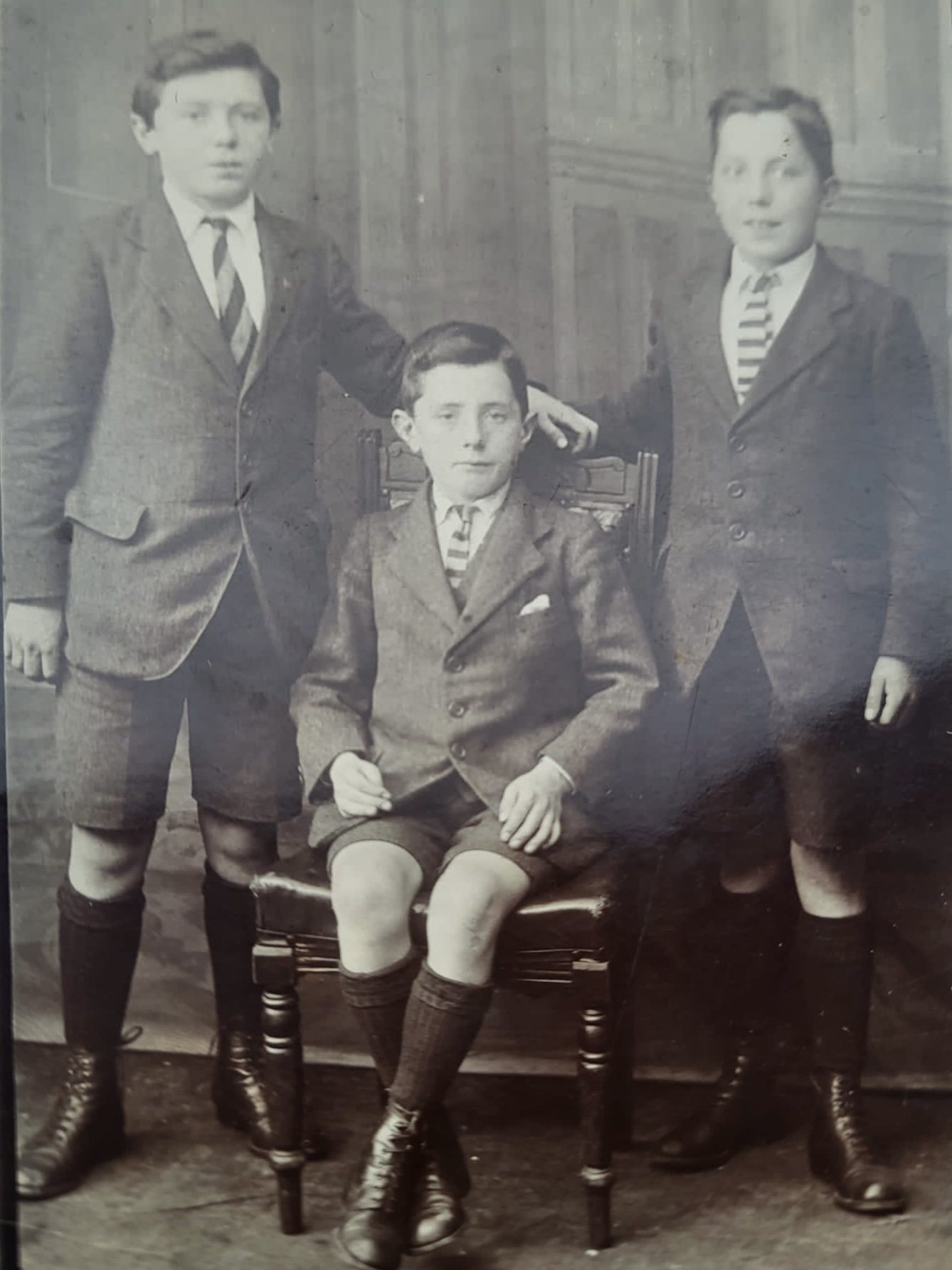
I have spent most of this book among my father's people, and they carried me into some grand company, into gentry and knights and a translator of the King James Bible. But there were also yeoman, farmers and tradesmen amongst them all. A man has two sides, and I would not trade the other one.
My mother, Julia Mary Elliott (1944–2022), came mainly of Cork working people and it is worth being precise about what that means, because these were not the unskilled poor of the storybooks. Her mother's people, the Bowdrens and Treacys, were stonemasons three generations deep on both sides. And the mason was the aristocrat of the building trades, a man who served years to his craft and carried it in his hands and eye. The stone they cut and laid is Victorian Cork; the gentry of this book may have paid for buildings, but men like these made them stand. Her father's people, the Elliotts, were weavers of Blarney Street, working one of the city's oldest crafts. Though it was a craft they came to, not from, for the family walked into Cork off the Tipperary land and one of them wore a soldier's uniform in France. Behind them all stood small farmers: off the West Cork land at Kilmalooda and Castlemagner (the same county ground, as it happens, that my father's people farmed) and off midland ground too, at Golden in the Tipperary vale and the borderland around Birr. My mother's people, it turns out, have their own long road into Cork.
They held no manor and bore no arms, and left no printed pedigree. What they left instead was the city itself, and the civil registers in which Ireland, from the 1860s, set down every one of them by name. And if the motto over this book means anything, tu ne cede malis, yield not to misfortunes, it belongs first to people who met misfortune without a rent-roll to soften it. There is as much honest history in a registrar's plain hand as in any coat of arms. Next are the two chapters on my mother's line: her father's people, the Elliotts and Condons, and her mother's people, the Bowdrens and Treacys. They meet, as it happens, on the same Cork hillside.