The famous cousins (or, not!)
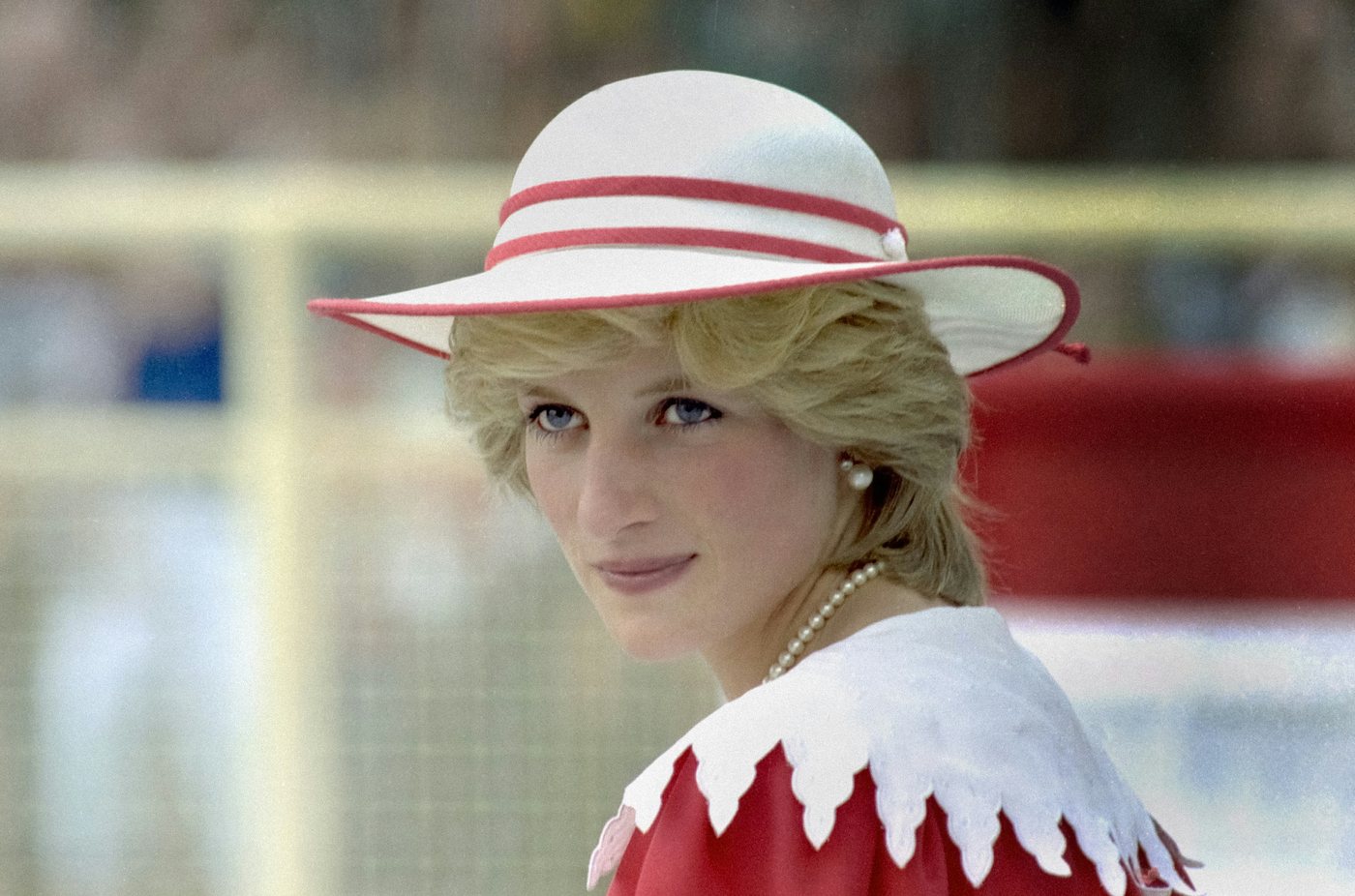
No old West-Cork family escapes the famous-cousin story. The same small circle of planter gentry (Boyle, Bernard, Freke, Beamish, Baldwin) married round and round for three centuries, so a descendant can spin a thread toward almost anyone. Some of those threads are real, some are not. Here are the ones worth telling.
Diana, Princess of Wales
Edmund Spenser, the poet of The Faerie Queene, is a brother of my 10× great-grandmother, by blood; he sits in my family through his sister Sarah, who married John Travers (Chapter 3). And the poet himself claimed kinship with the Spencers of Althorp, Diana’s family: he dedicated poems to the three Spencer sisters and addressed them as his cousins, and the Althorp family never disputed it. In his own age, when a surname was far rarer than now and a shared one carried real weight, that public, unchallenged claim of cousinhood meant a great deal.
Spenser’s own modern biographer, Andrew Hadfield, records that the poet was related to the Spencers of Althorp, and so to Diana, and adds that a more direct, blood relationship is “probable,” though no evidence now survives to prove it. The documented half of that link ran through Spenser’s second wife and is not my route; mine is the poet’s own blood, his sister’s line, the very line his biographer thinks probably reached Althorp. It cannot be proven at this distance, and no later scholar has managed it; but in Spenser’s own day, it was simply accepted.
And here is the part that needs no caveat: Spenser wrote part of The Faerie Queene at Myrtle Grove in Youghal, the house of Sir Walter Raleigh, the very town from which my Lucas ancestors came (Chapter 4), by tradition arriving with Raleigh about 1580. The poet’s Youghal and my own family’s ground are the same few streets.
The Stuart queens
A second story seeks to link Hildegardis Hyde (my 8x-great-grandmother and wife of Col. Richard in Townsend) to Anne Hyde, mother of Queen Mary II and Queen Anne. But these are two different Hyde families, the Cork Hydes of Castle Hyde on one side, and Lord Clarendon’s Hydes of Norbury and Dinton on the other: a shared surname, and no more. The nicer truth is that the Castle Hyde Hydes were Spenser’s actual Munster neighbours, and a Lucas of Youghal married an Elizabeth Hyde of Castle Hyde, so the Cork Hydes really are kin-by-marriage in my wider tree, just not the royal ones.
A curiosity from the same generation, and a true one: through my Swayne in-laws, not these Hydes, a real Lord Chief Justice, Sir Nicholas Hyde, married into the family. He belonged to Clarendon's Wiltshire Hydes; it is a marriage at the edge of my tree, not a drop of royal blood in it.
Henry VIII and the Parrs
The grandest claim that floats around the Beamish circle is a descent from Anne Parr, sister of Henry VIII’s last queen, and so up through Edward III to the whole royal house. It is a real and much-documented line, but it runs through George Beamish’s marriage to Catherine Baldwin in 1789, and the Baldwins of Lissarda, who carried the Parr blood. My Beamishes and that branch share the Kilmalooda trunk, Francis Beamish (d. 1679) and Catherine Bernard, but part company below it, and the Baldwin marriage sits on the other branch. So that crown belongs to a cousin, and I am happy to leave it with them.
The distaff ladders of July 2026, the female lines of my father's grandmother's people, restocked this chapter's gallery, and this time the threads are documented, not spun. Edward de Vere, 17th Earl of Oxford, the man half the world believes wrote Shakespeare, was the first cousin of my ancestor Jane Vere: her uncle's will of 1562 names their two fathers as brothers on the same page. The family takes no view on the authorship question, but accepts the relation with a straight face and a raised eyebrow. The Fighting Veres, Sir Francis and Sir Horace, were Jane's first cousins too; the de Vere poets of Curragh Chase, Sir Aubrey and Aubrey Thomas, are collaterals of the Hunts, one generation after Jane Hunt left the family, and their assumed name turns out to have been honestly come by. Sir James Ware, the historian on whom half of Irish source-hunting still leans, was the brother of my ancestor Martha Ware. The Duke of Wellington descends from a daughter of Archbishop Loftus, my direct ancestor, which makes the Iron Duke a collateral of that same line of my father's grandmother; and the same Colley road, followed patiently to its end, makes William, Prince of Wales, my thirteenth cousin exactly, the two lines parting at two of the Archbishop's daughters. Strongbow was the nephew of my ancestor Alice de Clare, which the FitzMaurice ladder on the other flank finds amusing, having stemmed from his own invasion companions. The O'Briens of Thomond, Brian Boru's house, stand in the direct line through Lady Honora. And Elizabeth de Clare, foundress of Clare College, Cambridge, married, of all the men in England, Roger d'Amory: and where this page once called her my blood cousin, the August research did better, proving her sister Eleanor de Clare a direct ancestress. The baron our own name points at is now the husband of an ancestress's sister, kin by marriage at one remove, his first documented place in this family in seven centuries of legend. The pattern is still being turned in the light in the Journal. The full ladders are Chapters 18 to 24 of the living edition.
And the deepest wiring brought a second gallery. William Marshal, "the greatest knight that ever lived," is a direct ancestor, not a cousin, as is Strongbow, who took Leinster in 1170; their fame is now family rather than coincidence. Lord Hastings, Edward IV's chamberlain whom Richard III executed without trial, was the brother of my ancestress Elizabeth Hastings, who kneels opposite her husband Sir John Donne in Memling's Donne Triptych in the National Gallery: two direct ancestors painted from life in the 1470s, which is as close to a family photograph as the fifteenth century allows. And two royal gateways that would have added Edward III and the Plantagenets were tested and failed, and are kept on the site as failures, in Chapter 24: the cousins we can prove we do not have. The July waves added a last shelf of cousins almost too grand to use: Richard the Lionheart, brother of the ancestral King John and the man who kept the ancestress Alys of France waiting twenty-five years; Philip Augustus of France, her half-brother; Otto the Great, first emperor of the Ottonian line, brother of two ancestresses; and Hubert Walter, the Archbishop of Canterbury who raised the Lionheart's ransom, brother of the ancestral first Chief Butler of Ireland. And the August waves added the grandest shelf of all: the entire royal House of Stuart, James I and VI, Charles I, Mary Queen of Scots and all, are collaterals now, for they descend from the ancestral Alan fitz Flaald, the Breton knight whose younger son became Steward of Scotland while his elder son's line, ours, became the FitzAlan Earls of Arundel: one Breton father behind an English earldom and a line of kings. And by way of the Kingsmills of Ballybeg, Elizabeth Pepys, the diarist's wife, is a documented blood cousin, which makes Samuel Pepys himself a cousin's husband, kin by marriage, the same standing this family long ago granted Roger d'Amory. The site notes with satisfaction that it already knew him: he is the man who kept finding reasons to visit the Rose Tavern in Covent Garden, the house of my ancestress Constance Long's father.
The printed pages above tell the cousins as the research knew them to that point, the Diana thread through Edmund Spenser among them: claimed, probable, unprovable, which is exactly what this chapter's title allows for.
The work since has added a documented road. Diana was my seventeenth cousin once removed; the common ancestor is Richard Wydeville of Grafton (d. 1441). My descent runs through Joan Woodville, Isabel Haute and the St Legers to the Kingsmills; Diana's through Elizabeth Woodville, Elizabeth of York, the Stuarts by Henrietta FitzJames, James II's natural daughter, and so through the Waldegraves and Seymours to the Spencers. It follows that William, Prince of Wales is a cousin on both sides: thirteenth through his father's Loftus line, and by this separate road through his mother.