The third crown of Wales
25 October 2026
Owain Glyndŵr's own paternal line has been carried ten rungs back, through the princes of Powys Fadog, to Madog ap Maredudd, last king of a united Powys, and Bleddyn ap Cynfyn, who died in 1075 holding Powys and Gwynedd together. Wales now stands in this family's line by all three of its historic crowns, and the count moves to twenty-two royal houses and twenty sovereign crowns.
When Owain Glyndŵr entered this tree in August, he arrived, as marquee ancestors usually do, by his daughter: Alys, whose quiet marriage to a Herefordshire knight smuggled the last Prince of Wales's blood into the gentry while her father's rebellion was still being hunted. What stood behind Owain himself stayed honestly blank. His parents were terminal cards, and the site said so.
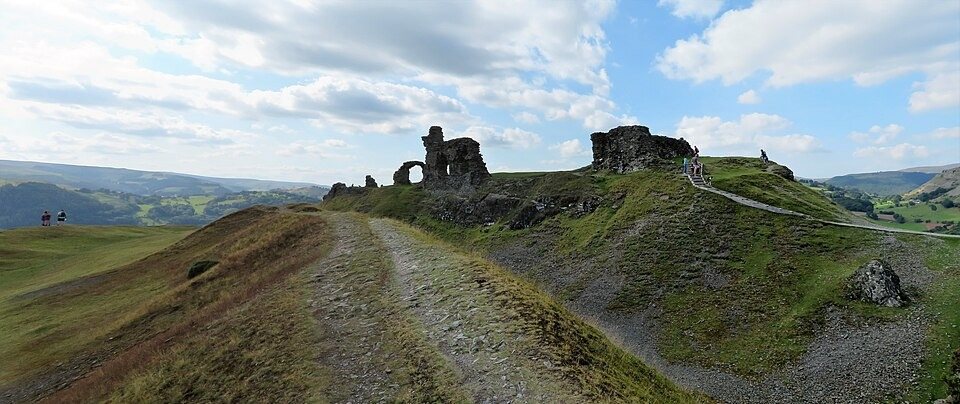
The September research filled the blank, and it turns out to be a royal road in its own right. Glyndŵr's paternal line now climbs, rung by graded rung through the princes of Powys Fadog, the lords of Dinas Brân above the Dee, to Madog ap Maredudd, who died in 1160 as the last man to rule a united Powys, and behind him to Bleddyn ap Cynfyn, killed in 1075, who for a time held Powys and Gwynedd together. The wiring follows Lloyd's History of Wales, read first-hand, with the one soft rung, a princess the pedigrees call Susanna, hedged in the notes exactly as the source hedges her.
Two new kings, then, and with them a change in the arithmetic. Wales has always been counted carefully here: one country, several houses. But the research now holds crowned kings of all three historic Welsh kingdoms in the documented direct line: Gwynedd through Llywelyn the Great, Deheubarth through Rhys ap Tewdwr, and now Powys through Bleddyn and Madog, each reached by a different road and leaving by a different door. Counted the way the rest of the roll is counted, sovereign realm by sovereign realm, that is three Welsh crowns, and the family total moves from eighteen sovereign crowns to twenty, across the same twenty-two royal houses.
There is a pleasing shape to how the Powys line travels. It does not wander: it runs from Bleddyn's Powys down to Glyndŵr, from Glyndŵr to Alys, and from Alys along the Scudamore and Dwnn marriages into the Trussells and the de Vere Earls of Oxford, the same great conduit that has carried half the crowns in this tree. The full roll of twenty is drawn in The Royal Houses, the doors they left by in Where the crowns stop, and the whole ascent on the tree.