The crown, honestly
25 July 2026
The tree reached kings this week, and not one but five: the Conqueror, Alfred the Great, Charlemagne, Robert II of France and Diarmait of Leinster. Before you believe a word of it, let me show you the two royal doors that turned out to be locked.
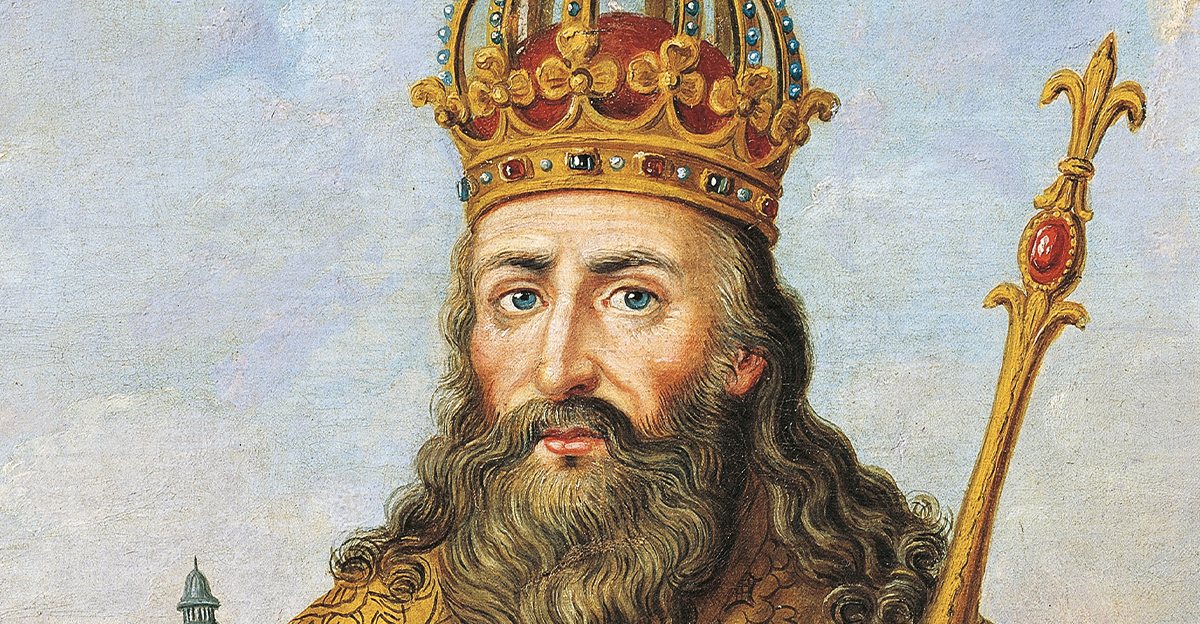
A family history that claims a king should be trusted less, not more, and I know it. So here are the failures first, because they are the only reason the successes are worth reading.
Two roads to royal blood opened this week and both were shut on the evidence. The first ran through a marriage of the eleventh Earl of Oxford to a granddaughter of John of Gaunt: a Plantagenet bride, but the marriage was childless, so no Plantagenet blood, only a wedding. The second was the seductive one. It climbed through Elizabeth Trussell to a woman called Margaret Dun, and it needed one link to hold: that Alice Camoys was the daughter of Hotspur's widow, Elizabeth Mortimer, who carried the blood of Edward III. A three-pounds-fifty download of Sir John Donne's 1500 will confirmed the family around her. But the genealogist Douglas Richardson had already caught the exact error the old pedigrees make: Alice Camoys's mother was Elizabeth Louches, and no king stands behind her. No Edward III. That door is drawn on the site as what it is, a marriage without the blood it was supposed to bring, and it stays drawn.
Now the door that held, and note that it does not run through the grandest name but through a documented son. Margaret de Clare, my direct ancestress, is already famous for barring Queen Isabella from Leeds Castle in 1321 and being sent to the Tower for it. Her Clare line climbs, mother to son, to Robert of Gloucester: a son of King Henry I, born outside the King's marriage but openly acknowledged by him and made Earl of Gloucester, the Empress Matilda's champion, once captured in battle and exchanged for King Stephen himself, prisoner for prisoner. Through him the line reaches William the Conqueror, and does not stop there, nor at one crown. His queen, Matilda of Flanders, was the daughter of Robert II, King of France, so the Capetian crown enters one marriage below the English; and Matilda's own line climbs the counts of Flanders to Alfred the Great, King of Wessex, whose daughter married into Flanders, and to Charlemagne, Emperor of the Romans. Above each the pedigrees thin toward the legendary past, Cerdic and Woden behind the West Saxons, and there the wiring stops in every case, flagged note-only, the same honest edge this research keeps everywhere.
Two more giants came up the same ladder. William Marshal, "the greatest knight that ever lived," Regent of England, the man who reissued Magna Carta to save it, is a direct ancestor now, not a legend borrowed; and behind him Strongbow, who took Leinster in 1170 and married Aoife at Waterford, so that her father Diarmait Mac Murchada, King of Leinster, the man who brought the Normans into Ireland, enters the tree by the same marriage that opened the country to them. The Irish crown stands level with the Continental ones, and the family's Irish and English halves turn out to have been one blood eight hundred years before a Damery ever reached Cork. And on the field of Agincourt the family now stands twice, in different divisions: the eleventh Earl of Oxford in the centre, Thomas Lord Camoys on the left wing, their lines meeting nowhere but in me.
The full story, with the two failures given as much room as the five crowns, is Chapter 24 of the living edition; and the whole line is drawn as one chart, The Royal Descent, from Charlemagne down to the family.
My father wanted a line to the Conquest. It is here, and it runs past the Conquest to two emperors, and he would have distrusted it on sight, which is precisely why I led with the doors that failed. Because here is the thing the kings do not change: one rung from the bottom of this whole towering pedigree, a man named Damery walks into Bandon around 1690 out of an England no record has yet named, and it is still his name the family carries, and still his origin, not Charlemagne's, that is the true prize waiting. Crowned at the summit, unfinished at the root, and graded the whole way between. That is the only kind of family history worth trusting, and now, at last, it is the whole of ours.