The crown, honestly
The tree kept climbing, and it reached kings: William the Conqueror, and beyond him Alfred the Great and Charlemagne. This is the chapter that matters most, because two royal doors were tried and found locked, and it is the locked doors that make the open ones worth trusting. What came through the doors that held is now told across this chapter and the two that follow.
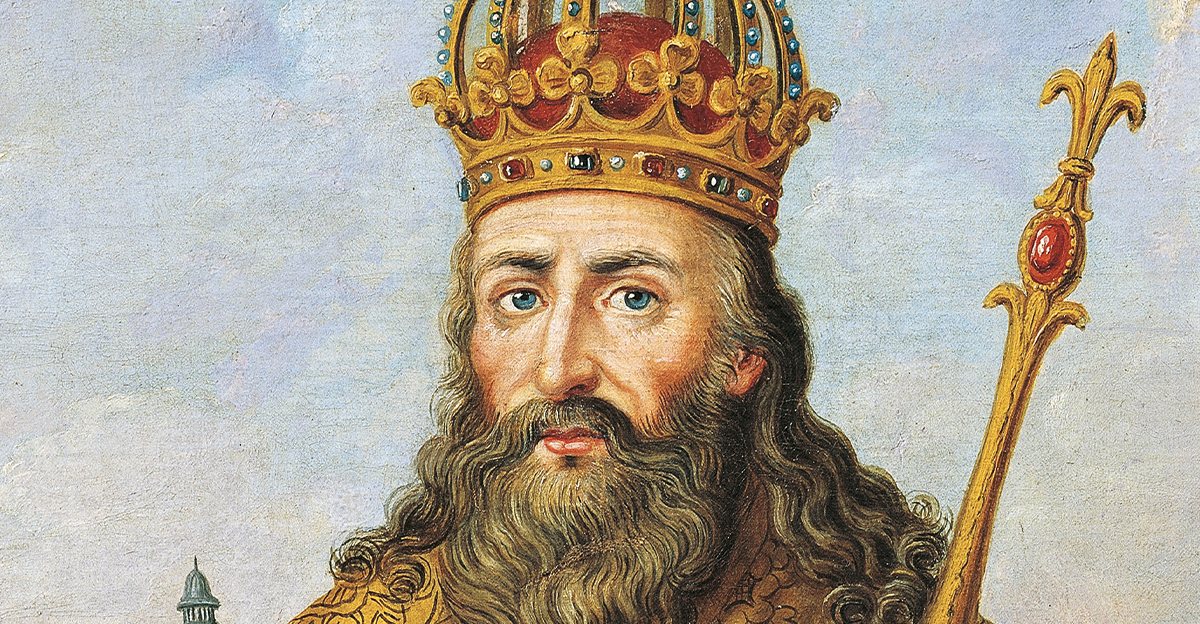
A family history that reaches a king should be read with more suspicion, not less, and this one asks for it. So let me give you the failures first, because they are the credential. Two roads to royal blood opened during this research and both were closed on the evidence. The first ran through a marriage of the eleventh Earl of Oxford to a granddaughter of John of Gaunt: a Plantagenet wife, but the marriage was childless, so no Plantagenet blood. The second was the tempting one. It climbed through Elizabeth Trussell to a Margaret called Dun, and it needed Alice Camoys to be the daughter of Hotspur's widow, Elizabeth Mortimer, who carried the blood of Edward III. A three-pound-fifty download of Sir John Donne's will confirmed the family around her; but the scholar Douglas Richardson had already caught the very error the old pedigrees make, and the records are plain: Alice Camoys's mother was Elizabeth Louches, no king behind her. No Edward III. The door was shut, and it stays shut on the site, a marriage without the blood it was supposed to carry. Hold on to that refusal, because it is about to earn its keep. The research that shut two doors on the Plantagenets later found a third door standing open, by a different child of a different king, and because the first two were shut honestly, the third can be believed: the family descends from Edward I by his daughter Elizabeth, and still, on the evidence, not from his grandson Edward III. The full story of that door, and of everything beyond it, is Chapter 26.
Now the door that held. It does not run through the grandest names but through a documented son. Maud de Badlesmere, already on the tree as a de Vere wife, was the daughter of Margaret de Clare, the woman who in 1321 refused Queen Isabella entry to Leeds Castle and had her archers fire on the royal party, and was sent to the Tower for it, reputedly the first woman imprisoned there. Margaret was a Clare of Thomond, and the Clare earls of Gloucester climb, mother to son, through Amice of Gloucester and William FitzRobert to Robert of Gloucester: a son of King Henry I, born outside the King's marriage but openly acknowledged by him and created Earl of Gloucester, the Empress Matilda's champion, once captured and exchanged for King Stephen himself, prisoner for prisoner. Through him the line reaches William the Conqueror and Matilda of Flanders beside him.
And it does not stop at the Conquest, nor at one crown. William's queen, Matilda of Flanders, was herself the daughter of Robert II 'the Pious', King of France, of the Capetian house, through her mother Adela: so the French crown enters the tree one marriage below the English one. And Matilda's own ancestry, standard and documented, climbs the counts of Flanders to a fork where two more crowns enter in successive generations. One count married Ælfthryth, a daughter of Alfred the Great, King of Wessex. The count before him married Judith of France, twice a queen of Wessex herself before she eloped to Flanders, and a daughter of Charles the Bald, whose grandfather was Charlemagne. So the documented line runs, graded at every one of its roughly forty generations, from a man named Damery arriving in Bandon about 1690 to the Kings of France and Wessex and the Emperor of the Romans. The whole ascent is drawn as a single chart, crown by crown, in The Royal Descent. Above each of them the pedigrees firm on a few names and then thin toward the legendary past, the Capetians toward their obscure origins, the West Saxons toward Cerdic and Woden, and there in every case the wiring stops: the frontier is marked note-only, the same honest edge kept for the Domesday Aubrey, the solid wired and the legendary flagged, never blurred.
Two more things came up the same ladder, and one is a fifth crown. The Clares married the Marshals, so William Marshal, first Earl of Pembroke, "the greatest knight that ever lived," Regent of England, the man who reissued Magna Carta to save it, stands in the direct line; and behind him his wife's father, Strongbow, who led the Norman invasion of Ireland in 1170 and married Aoife of Leinster at Waterford, so that her father Diarmait Mac Murchada, King of Leinster, the very man who brought the Normans into Ireland, enters the tree by the same marriage that opened the country to them. And Diarmait is not the only Irish crown, nor Aoife his only daughter in this line: his daughter Órlaith married Donal Mór O'Brien, the last King of North Munster, and carried a second Irish royal descent down through the O'Briens of Thomond to Brian Boru himself, High King of Ireland. That descent, and the deep Leinster kings behind Diarmait, have a chapter of their own. The two Irish crowns now stand level with the Continental ones, which is the truest thing this whole ascent discovered: the family's Irish and English halves were one blood eight hundred years before a Damery reached Cork. And on the field of Agincourt in 1415 the family stands twice, in different divisions: the eleventh Earl of Oxford in the centre, and Thomas, Lord Camoys, commanding the left wing, their two lines meeting nowhere but in me.
My father wanted a line to the Conquest. It is here, and it is larger than he dreamed, and he would have distrusted it on sight, which is exactly why I have shown you the two doors that failed before the ones that held. Eight Magna Carta sureties stand in the direct line, among them the leader of the barons himself; two archbishops who were Lord Chancellors of Ireland; the donor of the Book of Kells; a knight in a Memling altarpiece and his wife kneeling opposite him; a tavern-keeper's daughter from Covent Garden for ballast; and, at the summit, what began as a council of five crowns and now stands, after the July research, at twenty-nine royal houses and twenty-six sovereign crowns, from fifth-century Leinster to Plantagenet England, drawn house by house in The Royal Houses and told in Chapter 26. And still, one rung from the bottom, a man named Damery walks into Bandon around 1690 from somewhere in England that no record has yet named, and it is his name the family carries, and his origin, not the Emperor's, that remains the true prize still waiting. That is the shape of an honest family history: crowned at the top, unfinished at the root, and graded the whole way between.